Witamy ponownie
Zaloguj się do swojego konta Altimeter Cloud
Nie masz konta? Utwórz konto
Utwórz darmowe konto
Wyślemy link potwierdzający na Twój e-mail. Sprawdź folder spam, jeśli go nie otrzymasz.
Masz już konto? Zaloguj się
 Strona główna
 Urządzenie: 9C13-9ECF-436C
 Lot ID: 2602
Flight 2602
s
s
Pokaž zdarzenia
Pobierz
Dostosuj temp. & ciśnienie ?
Obraz
Powiększenie
Kliknij i przeciągnij lub užyj gestu
Porównaj lot ?
Podsumowanie lotu
Wysokość
Apogeum
698.21 Metry
Czas do apogeum
1.24 seconds
Wysokość wypalenia
0.14 m
Wys. maks. prędkości
279.83 m
Wys. wyrzutu
0.14 m
Wys. lądowania
0.14 m
Stabilność
Wskaźnik stabilności
0 / 100 (Słaby)
Nachylenie przy wypaleniu (20%)0
Prędkość pochylania/odchylania (30%)0
Coning · boost (25%)0
Prostoliniowość ciągu (15%)0
Launch tilt 0° · Coning 0/0°/s · Spin 0°/s · Thrust 0%
About this score
Worked out from the flight log between liftoff and 80% of apogee, independent of the angle the altimeter was mounted at in the airframe.
Nachylenie przy wypaleniu (20%) – how close to vertical it left the rod.
Prędkość pochylania/odchylania (30%) and Coning · boost (25%) – how much the nose swung off the rocket's own axis. The main factor.
Prostoliniowość ciągu (15%) – how cleanly the motor pushed along the body.
Spin about the rocket's own axis is not counted against it — a fast, straight spin is stable. The line under the bars shows the raw measurements.
Prędkość
Maks. wznoszenie
1359.38 m/s
Maks. opadanie
-2.34 m/s
Przy wypaleniu
164.570 m/s
Prędk. lądowania
10.040 m/s
Prędk. opadania
0.000 m/s
Prędk. wyrzutu
337.96 m/s
Recovery
Single deploy (no dual deploy detected)
Przyspieszenie
Maks. wznoszenie
1.11 G
Maks. opadanie
7.33 G
Maks. podczas spalania
0.71 G
Śr. wznoszenie
0.01 G
Śr. spalanie
N/A
Czasy
Wypalenie (pierwszy)
0 seconds
Apogeum
1.24 seconds
Možliwy wyrzut
0 seconds
Lądowanie
0 seconds
Wyjście #1 WŁ
0 seconds
Wyjście #1 WYŁ
0 seconds
Kąty
Nachylenie rampy
58.36°
Thrust calc pad tilt
0°
Maks. nachylenie do wypalenia
80.61°
Przechylenie startowe
-51.51°
Pochylenie startowe
32.52°
Maks. obrót (spal.)
0 dps
Śr. obrót (spal.)
0 dps
Ogólne
Flight time (approx)
2026-07-06 04:32 UTC (approx)
Data przesłania
06-Jul at 05:33
Próbki danych
5408
Całkowity czas nagrania
21.700 s
Śr. próbki/s
249.2
Liczba blokad
1
Wysokość nagrywania
41.72 m
Start po włączeniu
37s
Oś referencyjna
X
Bateria & temperatura
Bateria początek
100%
Bateria koniec
100%
Temperatura początek
35.88°C
Temperatura koniec
35.52°C
Temp. MT1 startowa
0°C
Animacja danych lotu
FLIGHT 2602
698.21 Meters
ALTITUDE
0.00m
VELOCITY
0.00m/s
ACCEL
0.00G
TILT
0.00°
PITCH
0.00°
ROLL
0.00°
YAW
0.00°
TIME
0.00s
AWAITING LAUNCH
ALT
altimetercloud.com
LAUNCH
T+0.00s
LANDING
BURNOUT
Motor burn complete
Uwaga: Animacja lotu wymaga montażu wysokościomierza w stałej orientacji. Skalibruj czujniki dla najlepszych wyników.
Notatki užytkownika
Dodaj to urządzenie do swojego konta, aby edytować
Film Youtube
Brak filmu
Dodaj to urządzenie do swojego konta, aby edytować
Zdjęcia lotu (0)
Brak zdjęć
Powiązana rakieta
Žadna rakieta nie jest powiązana z tym lotem
Informacje o urządzeniu
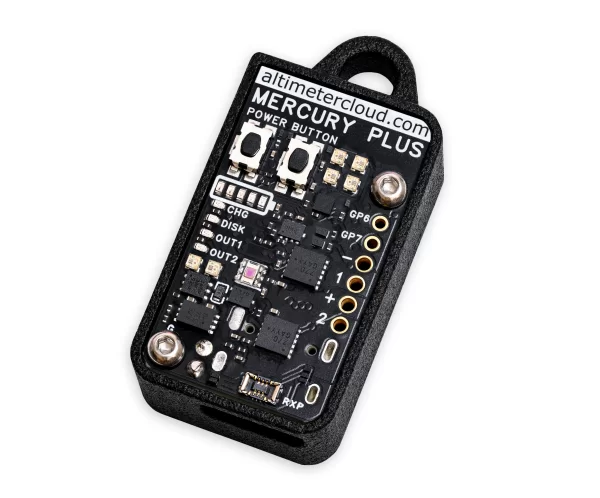
Mercury Plus
Revision 0
Revision 0
Mercury Plus
Ten lot został wykonany na Mercury Plus.
Wersja sprzętu
Rev 0
Wersja oprogramowania
1.00
Ostatnio online
20-Jul at 03:38
Akcelerometr
32G 3-axis
Gyroskop
2000 dgps 3-axis
Czujnik ciśnienia
Bosch BMP 390
Magnetometr
N/A
Silniki lotu
Nie dodano silników do tego lotu
Dodaj to urządzenie do swojego konta, aby edytować
Spalanie silnika
To overlay a thrustcurve here, add your motors to this flight using the “Flight motors” box above. The combined thrust curve is then scaled to match the recorded acceleration peak.
Miejsce startu, data i godzina
Kliknij na mapę, aby oznaczyć miejsce startu. Przełączaj między widokiem mapy i satelity.
No results found — try a different search.
Kliknij na mapę · Przeciągnij, aby dostosować
Lat—
Lng—
✓ Launch location saved successfully.
✗ Could not save location — please try again.
Rule events
No output rules fired during this flight.
Dopasowanie silnika (BETA)
Wciąż w trybie testowym! Pracujemy nad ustaleniem, jaki silnik był użyty.
Marka
Silnik
Wynik
Kształt
Spalanie
Contrail
G300
20
58.9%
80.2%
Estes
1/4A3T
12
2.3%
61.6%
Ogólne ustawienia lotu
To jest migawka ustawień użytych dla tego lotu. Przejdź na
Przejdź na stronę Moje urządzenia i skonfiguruj ustawienia..
Ciśnienie prognozowane
i
Set this to your local forecast pressure at sea level. This will offer you slightly improved accuracty for your flight, although it's not 100% essential every little helps!
Xcweather.co.uk is a decent place to grab pressures from for your location and time.
Xcweather.co.uk is a decent place to grab pressures from for your location and time.
1013.2 mbar
Detekcja startu
i
This is the altitude above the launch pad altitude where the altimeter will trigger itself into recording / flight mode.
The altimeter keeps a constant average of the pressure while waiting for launch, it uses a simple algorithm and the pre-flight buffers to do this. The most recent 120 samples (~4 seconds) are ignored so your pre-trigger altitude won't effect the ground baseline.
For almost all uses we suggest keeping this on the 25 Meter (~82 feet) default settings. If you want to test your altimeter by throwing it in the air, or are planning a very low flight you may want to lower the setting.
The altimeter keeps a constant average of the pressure while waiting for launch, it uses a simple algorithm and the pre-flight buffers to do this. The most recent 120 samples (~4 seconds) are ignored so your pre-trigger altitude won't effect the ground baseline.
For almost all uses we suggest keeping this on the 25 Meter (~82 feet) default settings. If you want to test your altimeter by throwing it in the air, or are planning a very low flight you may want to lower the setting.
35 meters
Częstotliwość próbkowania
i
The base sample rate of the altimeter's sensors in samples per second. This setting was deprecated in firmware 2.0+.
32 Hz
Sample ratio
i
The altimeter runs at 50Hz however you can record every sample or every X samples in order to extend the log time. For example if you set the ratio to 1 it will save 1:1 samples, or if you set it to 3 it will save 1 in 3 samples.
1:5 (hybrid, reduces after apogee)
Max samples
i
This is the maximum samples the altimeter will log per flight. When it reaches this amount it will stop and save the recording.
18000
Recording stop
i
This setting is how the altimeter decides to stop recording. You can choose either 450 (~9s) or 900 (~18s) samples stable or it will record until the max samples limit unless you press the BUTTON in Manual stop mode.
The samples stable method waits for the devices altitude not to change for the set number of samples. This is defined by not changing by more than +/- 1.0 meters for 98% of the samples, it's a reliable method to stop the recording after landing within 8-10 seconds (300 sample) or 16-20 seconds (600 sample).
The samples stable method waits for the devices altitude not to change for the set number of samples. This is defined by not changing by more than +/- 1.0 meters for 98% of the samples, it's a reliable method to stop the recording after landing within 8-10 seconds (300 sample) or 16-20 seconds (600 sample).
Auto: 450 samples stable (~9s)
Oversampling
i
Oversampling is a internal setting of the BMP 390 pressure sensor. It is how many samples are taken for each reading. By taking multiple samples for each pressure reading the altimeter reduces noise and increases the resolution of the output.
The sensor can run at 50 samples per second in 4X mode, so we suggest leaving it in this mode as it will offer the highest accuracy.
The sensor can run at 50 samples per second in 4X mode, so we suggest leaving it in this mode as it will offer the highest accuracy.
16x Oversampling
IIR filter
i
The IIR filter is another internal sensor for the BMP390 pressure sensor. It is a Infinite impulse response filter used to enhance pressure measurement accuracy by reducing noise. It's primarily for smoothing out rapid pressure changes.
We suggest not setting this too high as it will cause delay to changes in altitude if set very high.
We suggest not setting this too high as it will cause delay to changes in altitude if set very high.
COEFF 7
Pressure filter
i
This filter is a software Kalman filter that runs on the altimeters processor.
The Kalman filter uses a prediction step based on a system model and then a correction step using new measurements to refine its estimate, it creates accurate most certain results from data with noise in it.
The Kalman filter uses a prediction step based on a system model and then a correction step using new measurements to refine its estimate, it creates accurate most certain results from data with noise in it.
Kalman 2 (default)
Lockout change
i
This is how we detect a lockout. If the pressure changes by this much in a single sample downwards (pressure increase, lower altitude) then it's likely to be a false reading. Multiply the setting by 32 to get the speed in meters per second that it will trigger at.
0.5 meters
Sync sensors
i
The filters on the pressure sensor can cause it to lag very slightly behind the Accelerometer and Gyroscope data.
The Sync sensors option detects how far out of sync these sensors are. It then corrects the Acceleration and Gyroscope readings to match the pressure sensor.
WŁĄCZONY (188 samples / 771.00ms)
Orientation
i
This is the orientation you intend to install the Altimeter in your rocket. It's needed to ensure completly accurate angles and orientation charts and reports. Check out the Manual for more information on this.
Upwards (text up)
IMU filter
i
The IMU filter, or fusion filter takes the data from each axis of the Gyroscope and Accelerometer to calculate the Pitch, Roll, Yaw and tilt angle from vertical.
These filters can build up some discrepency over time so it's important to calibrate your sensors to minimise this.
Madgwick 6-Axis
Launch ALP
i
This is prevention against accidental launch detection.
With this disabled the launch is based only on pressure and something that creates a low pressure can trigger the flight by accident. For example pulling your nose cone off can even trigger it.
With this enabled the rocket also needs to have seen 8 samples (0.25 seconds) of acceleration above this setting in the last 3 seconds as well as the pressure drop to trigger. There is a backup trigger of 1.05 seconds of altitude being above the launch detect setting too.
There are very few situations where this option would cause issues, so we suggest leaving it on.
With this disabled the launch is based only on pressure and something that creates a low pressure can trigger the flight by accident. For example pulling your nose cone off can even trigger it.
With this enabled the rocket also needs to have seen 8 samples (0.25 seconds) of acceleration above this setting in the last 3 seconds as well as the pressure drop to trigger. There is a backup trigger of 1.05 seconds of altitude being above the launch detect setting too.
There are very few situations where this option would cause issues, so we suggest leaving it on.
1.4G
Launch lock
i
When enabled, the altimeter locks out recording for a set period after power on to prevent false triggering during setup.
DISABLED
Static temperature
i
A fixed temperature value used for altitude calculation when the external temperature sensor is disabled or not connected.
15 °C
Temp sensor
i
If an external MT1 temperature sensor is connected, this controls whether it is used for logging only or also for altitude calculations.
DISABLED
Ustawienia wyjścia
To jest migawka ustawień użytych dla tego lotu.
Arm switch
i
When enabled, GP6 is a hardware arm switch — outputs and rules are held off until the switch is closed to ground.
DISABLED
Startup lockout
i
Outputs and rules are blocked for this many seconds after power-on while sensors settle. 0 = off.
None
Launch confirm delay
i
After launch is detected, outputs and rules won't fire until this many seconds have passed.
2 s
Altitude floor
i
Outputs and rules are blocked until the rocket is at least this height above the launch pad.
50 m
Custom dataset 1
i
User-defined expression evaluated per sample, available for charting.
—
Custom dataset 2
—
Kalibracja czujników
Przesunięcia kalibracji użyte w tym locie.
Gyroskop
⚠ Gyroskop nie został skalibrowany
X
0.000°
Y
0.000°
Z
0.000°
Akcelerometr
⚠ Akcelerometr nie został skalibrowany
X
0.000 mG
Y
0.000 mG
Z
0.000 mG
Ustawienia urządzenia
To jest migawka ustawień użytych dla tego lotu.
To jest migawka ustawień użytych dla tego lotu.
TAG urządzenia
i
A custom name or tag assigned to this device for easy identification.
Merc1031
Język
i
The language setting configured on the device.
🇬🇧 English
Tryb wyłączania
i
Controls what happens after recording. Standard shuts down normally, Delayed keeps WiFi on for 30 seconds after landing, Stay on keeps the device powered on.
Delayed 30s
Jasność LED
i
The brightness level of the LED indicators on the Mercury. Lower values save battery.
20%
WiFi TX power
i
WiFi transmit power level. Higher gives better range but uses more battery.
2 dBm (low)
Tryb uśpienia
i
Controls whether the device enters low-power sleep when idle.
Normal (sleep when idle)
Monitor baterii
i
Monitors battery voltage during the flight.
DISABLED
Cloud group
i
The cloud group / category this flight is assigned to.
General use
Porty GP6 / GP7
Sterowanie portami GP nie było dostępne przed firmware 2.0
Płytka servo I2C PCA9685
Sterowanie portami GP nie było dostępne przed firmware 2.0
Prognoza i hamulce powietrzne
Ta funkcja nie była dostępna przed wersją 2.10+
Komentarze
Komentarze
Zaloguj się aby komentować.
Zaloguj się aby komentować.