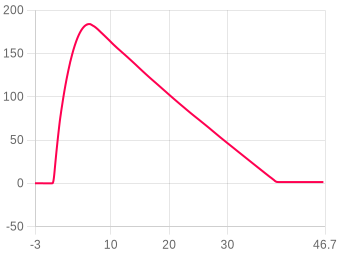
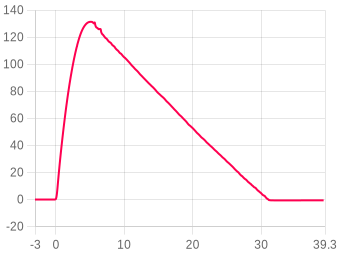
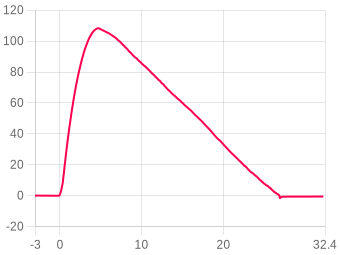
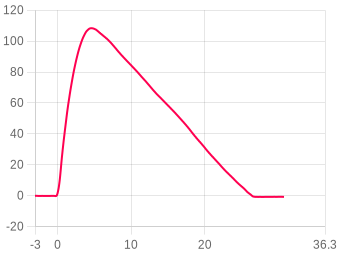
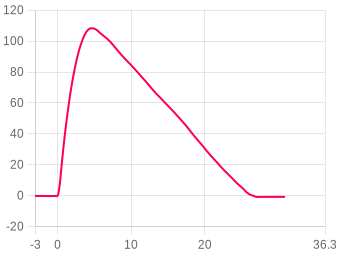
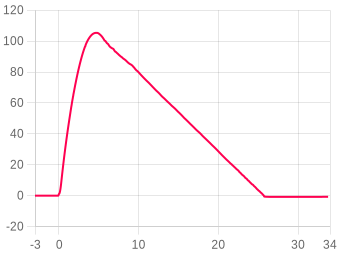
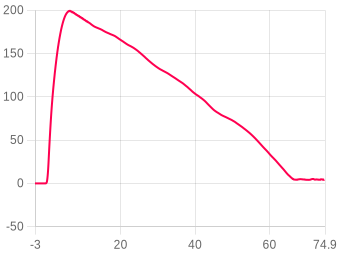
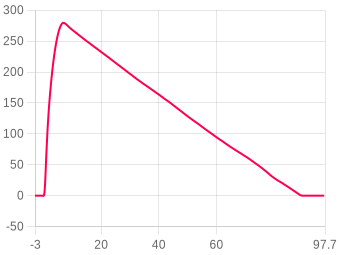
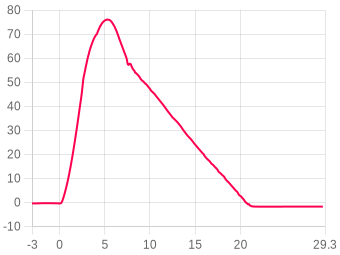
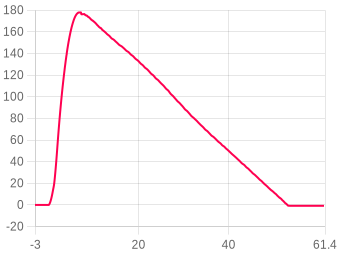
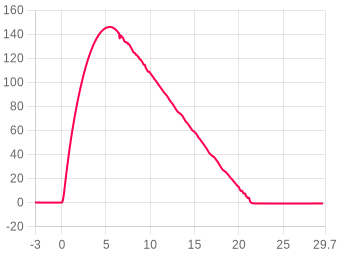
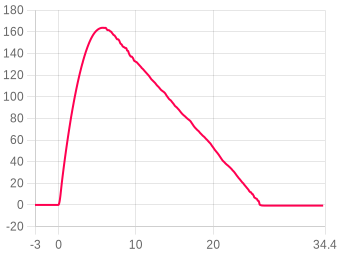
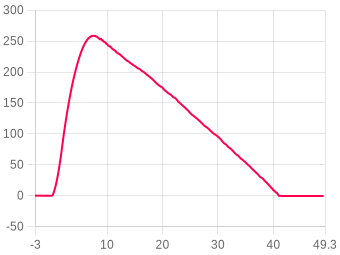
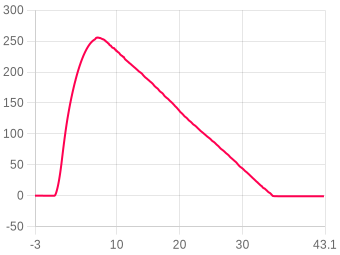
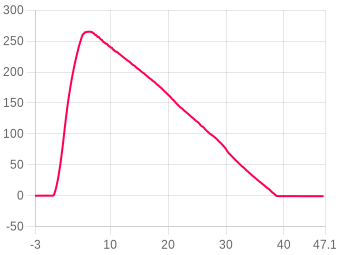
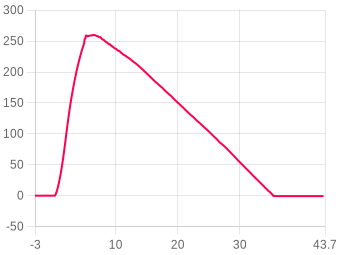
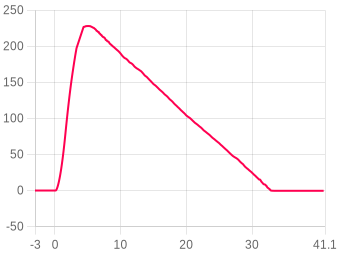
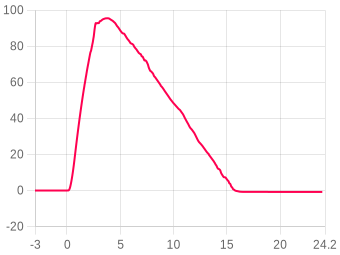
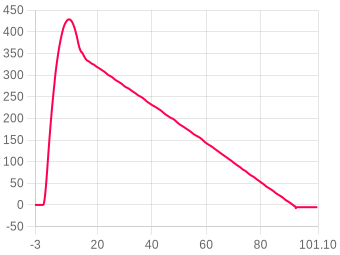
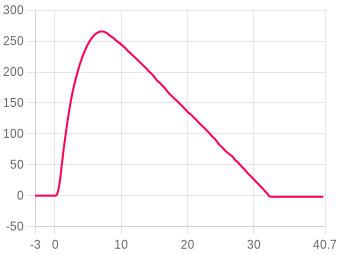
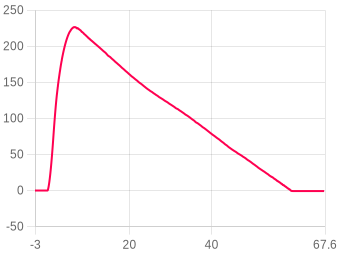
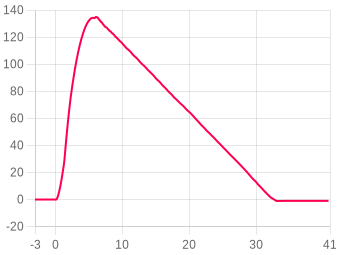
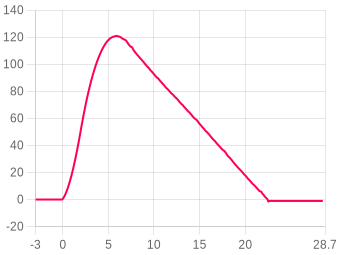
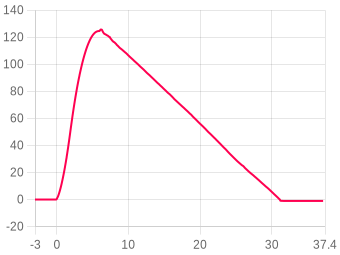
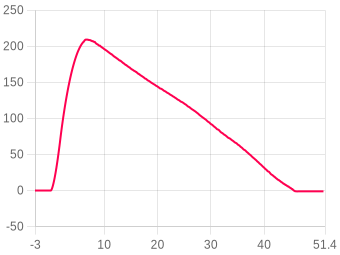
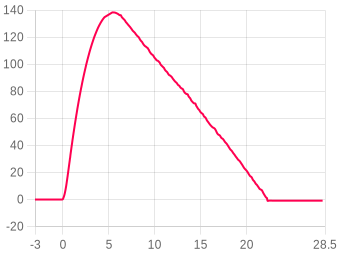
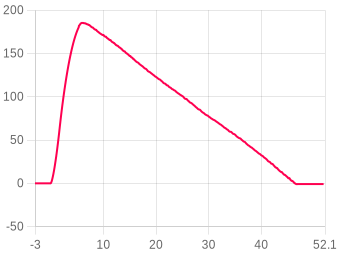
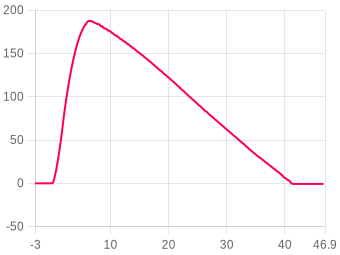
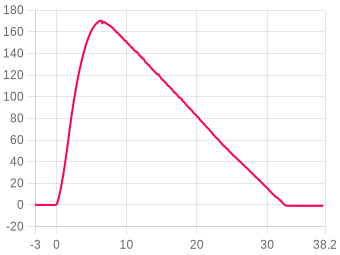
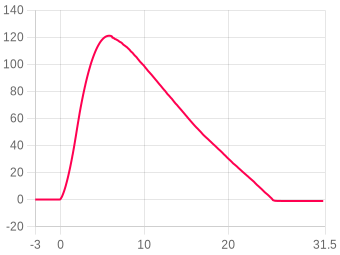
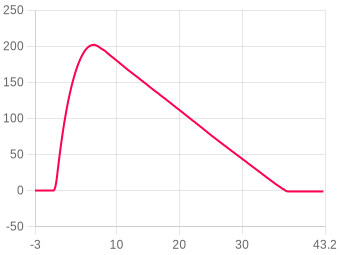
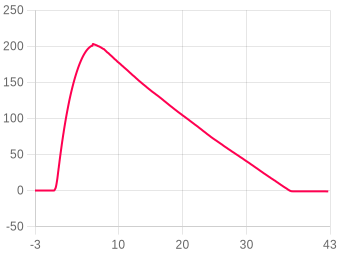
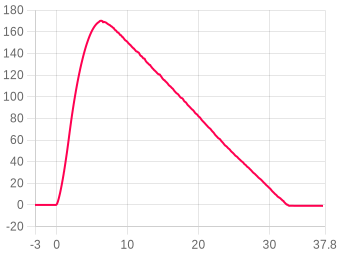
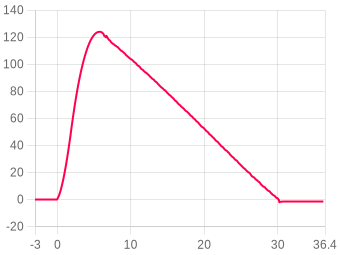
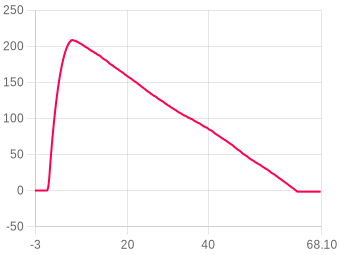
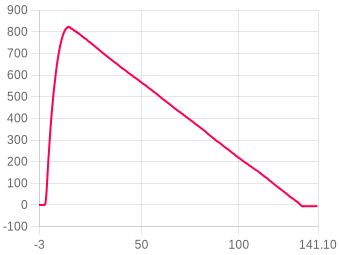
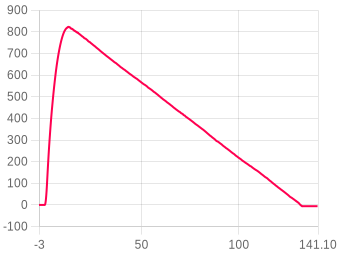
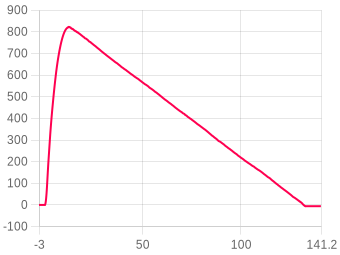
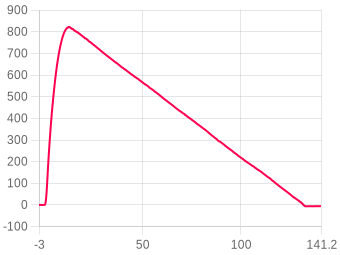
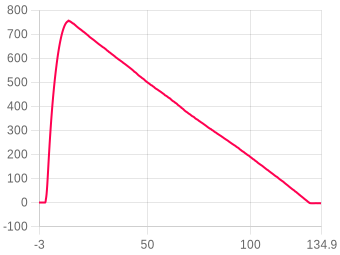
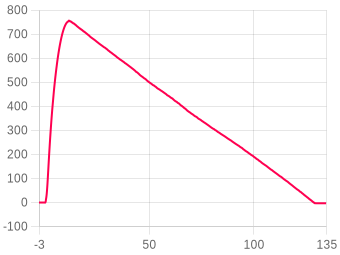
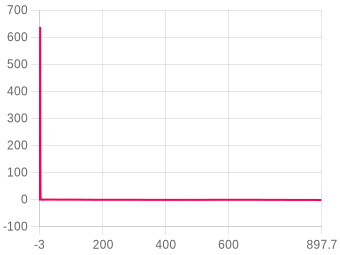
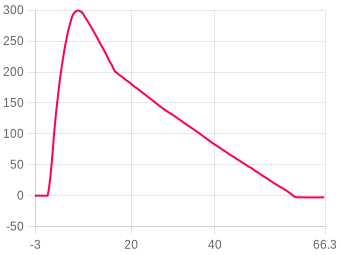
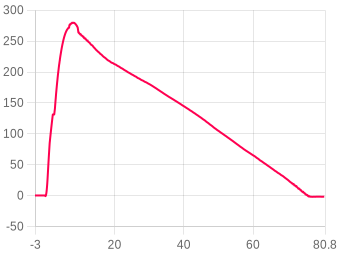
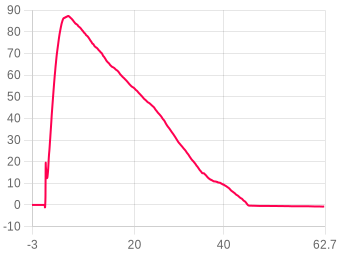
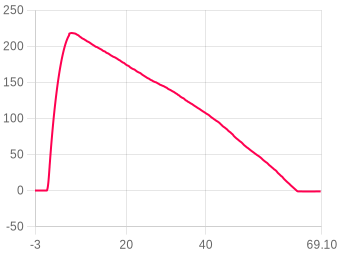
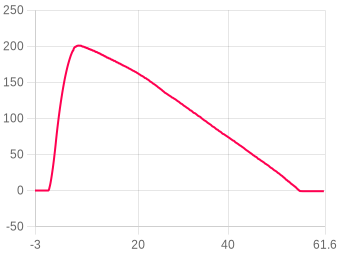
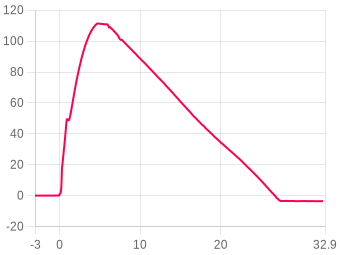
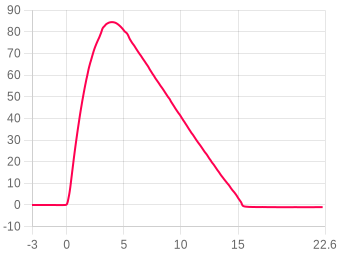
Distância
Escolha a unidade de distância: Metros(m), Pés(ft), Milhas(mi) ou Quilômetros(km)
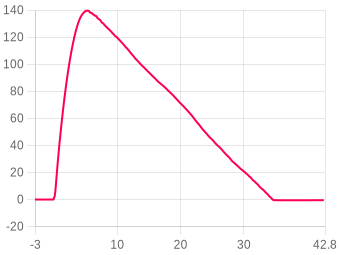
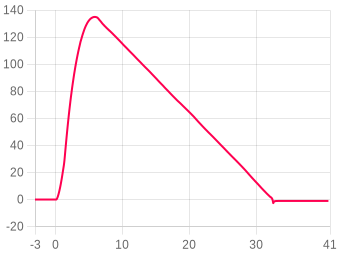
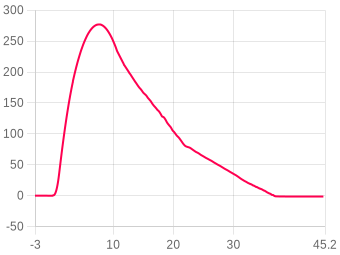
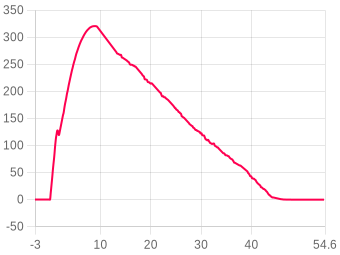
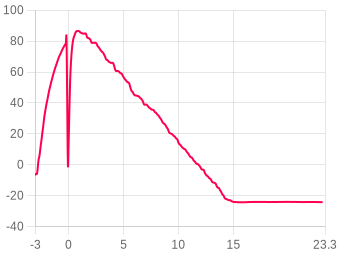
Velocidade
Escolha a unidade de velocidade: m/s, ft/s, mph ou km/h
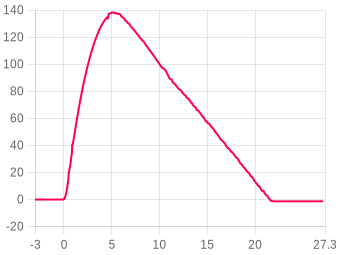
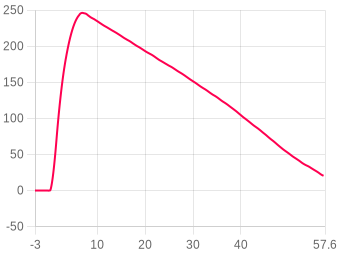
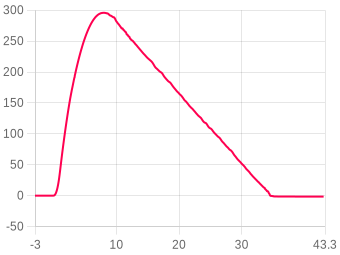
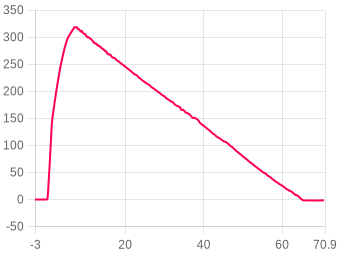
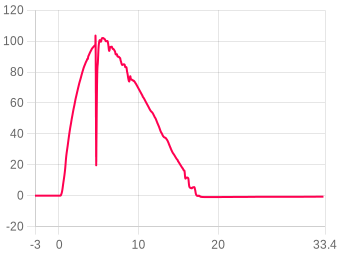
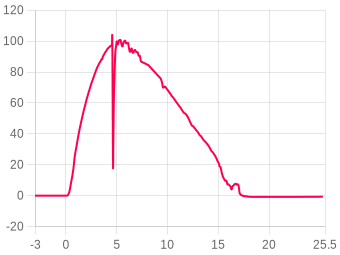
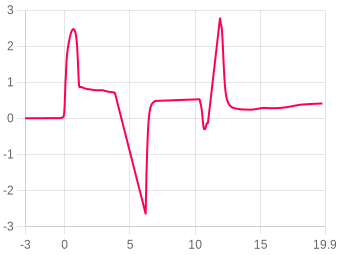
Aceleração
Escolha a unidade de aceleração: m/s² ou G

Yellow Alpha flight 62

Nano V1 Rev 4 · firmware 2.00Secure logSecure logThe altimeter signed this log and it passed verification on upload, so the data is unchanged since the device wrote it.Signatures use Ed25519, which no current technology can forge.
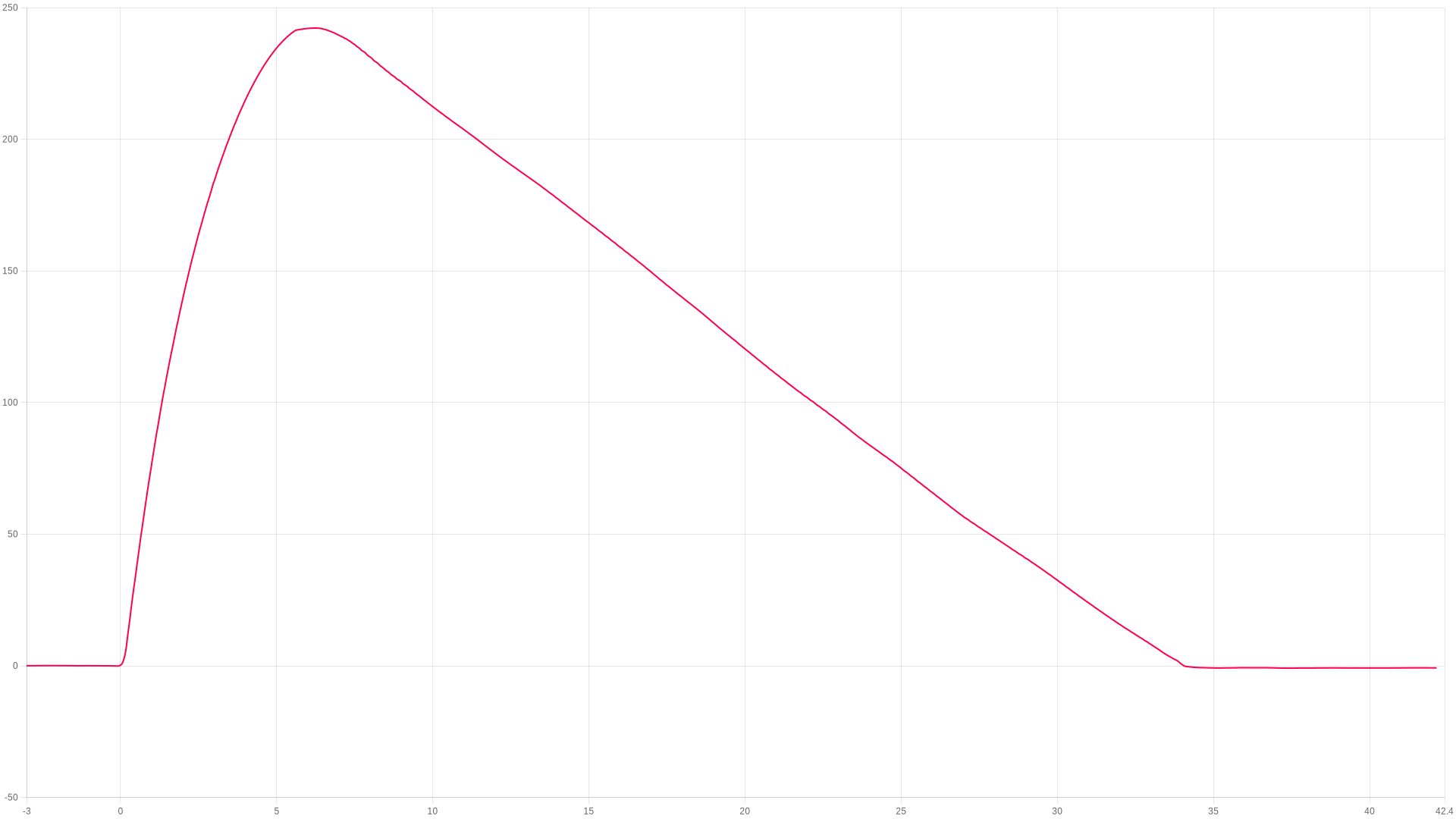
Apogeu
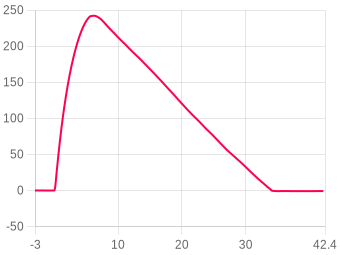
242.28m
6.26 s after launch
Máx. subida
95.52m/s
peak ascent
Máx. durante combustão
36.18G
during the burn
Aterragem
34.01s
touchdown 7.8 m/s
⚠The accelerometer reached the limit of its 32 G range for 180 ms during the burn, so the peak acceleration, thrust and impulse here may read low.
ZOOM TO
s
s
Mostrar eventos
Ajustar temp. & pressão ?
Imagem
Zoom
Clique e arraste, ou belisque no telemóvel
Comparar voo ?
Something look wrong with this flight's data?
Tell us what looks wrong and we'll look into it. It helps us find and fix problems in the firmware and on the site, and we can correct this flight.
You're not logged in, so we can't let you know when we've looked into it.
Resumo do voo

The flight, moment by moment

Liftoff
0 s
Ângulo da rampa10.5°
Desvio da rampa9.93°
Fim combustão (primeiro)
0.33 s
Altitude0 m
Velocidade95.520 m/s
Launch detected
0.44043 s
Altitude30.05 m
Velocidade85.77 m/s
Possível ejeção
4.948 s
Altitude0 m
Velocidade m/s
Apogeu
6.25 s
Altitude242.28 Metros
Incl. máx. até fim comb.9.31°
Aterragem
34 s
Altitude0 m
Máx. descida-10.59 m/s

Estabilidade72.7%Bom

Inclinação no fim da queima (20%)73.5
20% · Rail angle 10.5°
Taxa arfagem/guinada (30%)81
25% · Coning 48.3/109.2°/s
Coning · boost (25%)45.6
25% · Spin 428.4°/s
Retidão de empuxo (15%)87.9
30% · Thrust 97.5%

Rocket information

Calculated from the flight data alone
Boost acceleration289.5 m/s²
average over the burn · 29.5 g
Coast deceleration16.1 m/s²
average · gravity plus drag
Ballistic coefficient206 kg/m²
fitted to the 5.92 s coast
Apogee lost to tilt0.26 m
flown vertical ≈ 242.5 m · from the tilt at burnout
Chute opening peak47.41 G
largest deceleration after ejection
Bateria & temperatura 83% → 80% · Temperatura início 31.89 → 31.68 °C · Lançamento após arranque 11m 27s

About the stability score

Worked out from the flight log between liftoff and 80% of apogee. It is independent of the angle the altimeter was mounted at, so it measures the flight rather than the fitting.

Inclinação no fim da queima (20%)20%How close to vertical it left the rod.
Taxa arfagem/guinada (30%)25%How much the nose swung off the rocket's own axis across the whole ascent.
Coning · boost (25%)25%The same swing during the burn, when it matters most.
Retidão de empuxo (15%)30%How cleanly the motor pushed along the body.

Spin about the rocket's own axis is not counted against it — a fast, straight spin is stable. The figures beside the score are the raw measurements behind these four.

Altitude
Apogeu242.28 Metros
Tempo até apogeu6.25 s
Altitude fim combustão0 m
Altitude vel. máx.20.57 m
Altitude ejeção0 m
Altitude aterragem0 m
Altitude gravação1287.52 m
Velocidade
Máx. subida95.52 m/s
Máx. descida-10.59 m/s
No fim combustão95.520 m/s
Vel. descida-8.246 m/s
Vel. ejeção m/s
Vel. aterragem-7.805 m/s
Aceleração
Máx. durante combustão36.18 G
Máx. subida54.33 G
Máx. descida47.41 G
Média subida2.53 G
Média combustão31.03 G
Tempos
Fim combustão (primeiro)0.33 s
Apogeu6.25 s
Possível ejeção4.948 s
Aterragem34 s
Ângulos
Ângulo da rampa ?10.5° ± 0.36°
Desvio da rampa ?9.9°
Incl. máx. até fim comb. ?9.31°
Orientação ?55.86°
Desalinhamento de montagem ?63° a definição de orientação parece errada
Rolagem no lançamento26.38°
Arfagem no lançamento51.22°
Rotação máx. (comb.)1051.9 dps
Rotação média (comb.)460.55 dps
Staging
Stages detected1
Burnout (refined)0.345 s
Stage S1 burnout
flip0.333 s
drag0.343 s
sig0.483 s
Recovery
Single deploy
No dual deploy detected on this flight.
Geral
Data envio25/10/26-19:41:00
Amostras de dados8760
Tempo total gravação47.169 s
Média amostras/s185.7
Número de bloqueios0
Lançamento após arranque11m 27s
Eixo de referênciaX
Bateria & temperatura
Bateria início83%
Bateria fim80%
Temperatura início31.89°C
Temperatura fim31.68°C
Something look wrong with this flight's data?
Tell us what looks wrong and we'll look into it. It helps us find and fix problems in the firmware and on the site, and we can correct this flight.
You're not logged in, so we can't let you know when we've looked into it.
Notas do utilizador
Sem notas
Adicione este dispositivo à sua conta para editar
Vídeo Youtube
Sem vídeo
Adicione este dispositivo à sua conta para editar
Imagens do voo 0
Sem imagens
Flown as
Rocket
Estes Industries
Motor configuration
Custom
1× Quest B14T-5, set on this flight
Loaded weight
45.1 g
set on this flight · estimated 46.4 g from the rated impulse

Measured burn

from this flight’s thrust and its loaded weight
Total impulse, NFPA 11254.83 Ns
rated 4.97 Ns, 2.9% under, within the 20% NFPA 1125 allows
Total impulse, absolute4.83 Ns
Measured asB14
sold as a B14T
Burn time, NFPA 11250.34 s
0.00 to 0.34 s
Average thrust14.3 N
impulse over burn time
Peak thrust16.5 N
at 0.16 s
Specific impulse214 s
2.3 g of propellant
Mass at burnout42.8 g
loaded weight less propellant
⚠The accelerometer reached the limit of its 32 G range for 180 ms during the burn, so the peak acceleration, thrust and impulse here may read low.
NFPA 1125, the code motors are certified to by NAR, Tripoli and CAR: the burn runs from where the thrust first rises above 5% of its peak to where it falls below it (7.8.3), and the total impulse from that rise to the last measurable thrust before ejection (7.8.5). Absolute counts every newton from liftoff. The same code lets a production lot vary 20% from its mean impulse for a model rocket motor and 10% for high power (7.8.6). Both figures follow the loaded weight: 1% out on the weight is about 1% out on the impulse. Here the thrust passed 5% of its peak before liftoff, while the pad held the rocket, so the NFPA 1125 figures start at liftoff.
Motores do voo
1st stage · 5s delay
1×B14T-5QuestDetails
Burn time
0.38 s
Diameter
18.00 mm
Average thrust
13 N
Max thrust
17.65 N
Total weight
16.10 g
Propellant weight
2.30 g
Propellant type
Blue Thunder
Impulse4.97Ns
Max thrust17.6N
Burn time0.38s
Impulse classB
1st stage thrustloading curve…
Motor data by ThrustCurve.org
Adicione este dispositivo à sua conta para editar
Foguete associado
🚀
Active
Yellow Alpha
Estes Industries — Alpha
1 flight linked
Type
Kit build
Diameter
41.3mm
Length
330.2mm
Empty weight
25.5g
Stages
1
Fins
3
Recovery
Parachute
Chute
30cm
Body
Kraft Paper
💬 No comments yet

Linked flights

Connect flights that belong together: a second altimeter flown in the same rocket, or the same rocket flown again. Linked flights appear on each other’s pages.

No linked flights yet.

Local de lançamento, data e hora

Clique no mapa para marcar o local de lançamento. Alterne entre vista de mapa e satélite.

Imagery © Esri, Maxar, Earthstar Geographics

Clique no mapa · Arraste para ajustar

Canopy height from the Meta and WRI High Resolution Canopy Height Maps v2 (Meta and World Resources Institute, 2026; source imagery © 2016 Vantor), used under CC BY 4.0. Ground elevation built from Terrain Tiles (Mapzen and AWS Open Data), derived from 3DEP and GMTED courtesy of the U.S. Geological Survey, SRTM courtesy of NASA, and ETOPO1 courtesy of NOAA. Map and imagery credited on the view above.

Site namePlayas Training Center - NSL WestLat31.943667Lng-108.548579Ground level1350.8 m · 4432 ftData lançamento2026-10-25Hora lançamento12:15
Animação dos dados

FLIGHT 3165

242.28 Meters

ALTITUDE
0.00m
VELOCITY
0.00m/s
ACCEL
0.00G
TILT
0.00°
PITCH
0.00°
ROLL
0.00°
YAW
0.00°
TIME
0.00s
AWAITING LAUNCH
ALT
altimetercloud.com
LAUNCH T+0.00s LANDING

BURNOUT

Motor burn complete

Nota: A animação de voo requer que o altímetro esteja montado numa orientação fixa. Calibre os sensores para melhores resultados.
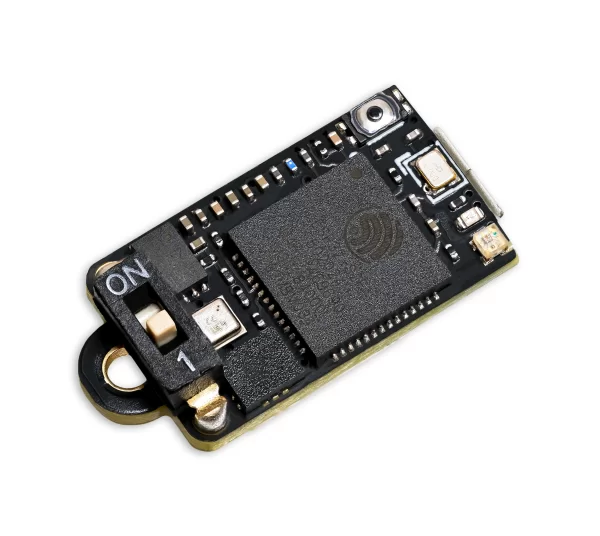
Nano V1
Rocketry Ltd

Nano V1

Altímetro compacto para foguetes pequenos. Este voo foi realizado num Nano V1.
Versão hardware Rev 4Versão software 2.00Última ligação 25/10/26-19:41:00

Especificações

Eletrónica

Microcontrolador
ESP32-S232-bit ESP32-S2 240MHz
Acelerómetro
ST LSM6DSO3232G 3-axis (SPI)
Barómetro
Bosch BMP581300 to 1250 hPa within specification
Giroscópio
ST LSM6DSO322000 dgps 3-axis

Registo de dados

Taxa de amostragem máxima
833 Hz
Máximo de amostras por registo
38,000
Registo mais longo
1 h 3 minAt 10Hz although default settings are 433Hz with 1:8 hybrid mode

Eletrónica

Microcontrolador
ESP32-S232-bit ESP32-S2 240MHz
Acelerómetro
ST LSM6DSO3232G 3-axis (I2C)
Barómetro
Bosch BMP581300 to 1250 hPa within specification
Giroscópio
ST LSM6DSO322000 dgps 3-axis

Registo de dados

Taxa de amostragem máxima
833 Hz
Máximo de amostras por registo
38,000
Registo mais longo
1 h 3 minAt 10Hz although default settings are 433Hz with 1:8 hybrid mode

Tamanho, peso e bateria

Tamanho
20 × 10 × 8.9 mm
Peso
1.65 g1.65 g com a bateria mais pequena
Tensão da bateria
3 a 4.2 V
Autonomia da bateria
5com a bateria mais pequena
Tamanho
20 × 10 × 8.9 mm
Peso
1.65 g1.65 g com a bateria mais pequena
Tensão da bateria
3 a 4.2 V
Autonomia da bateria
5com a bateria mais pequena

Documentos

Flights from this altimeter

20 of 3120 of 117
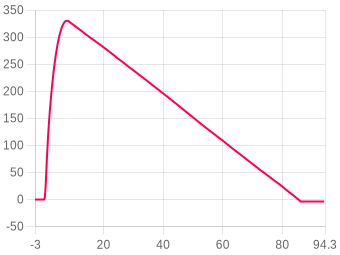
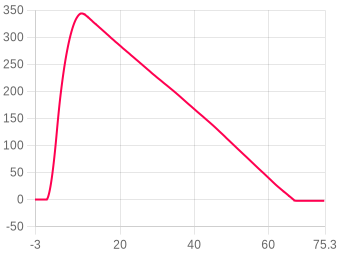
Settings, as they were for this flight

Definições gerais do voo
Pressão prevista
i
Set this to your local forecast pressure at sea level. This will offer you slightly improved accuracty for your flight, although it's not 100% essential every little helps!

Xcweather.co.uk is a decent place to grab pressures from for your location and time.
1013.2 mbar
Deteção lançamento
i
This is the altitude above the launch pad altitude where the altimeter will trigger itself into recording / flight mode.

The altimeter keeps a constant average of the pressure while waiting for launch, it uses a simple algorithm and the pre-flight buffers to do this. The most recent 120 samples (~4 seconds) are ignored so your pre-trigger altitude won't effect the ground baseline.

For almost all uses we suggest keeping this on the 25 Meter (~82 feet) default settings. If you want to test your altimeter by throwing it in the air, or are planning a very low flight you may want to lower the setting.
30 meters
Sample ratio
i
The altimeter runs at 50Hz however you can record every sample or every X samples in order to extend the log time. For example if you set the ratio to 1 it will save 1:1 samples, or if you set it to 3 it will save 1 in 3 samples.
1:1:1 (417Hz)
Max samples
i
This is the maximum samples the altimeter will log per flight. When it reaches this amount it will stop and save the recording.
38000
Recording stop
i
This setting is how the altimeter decides to stop recording. You can choose either 450 (~9s) or 900 (~18s) samples stable or it will record until the max samples limit unless you press the BUTTON in Manual stop mode.

The samples stable method waits for the devices altitude not to change for the set number of samples. This is defined by not changing by more than +/- 1.0 meters for 98% of the samples, it's a reliable method to stop the recording after landing within 8-10 seconds (300 sample) or 16-20 seconds (600 sample).
Auto: 8s stable altitude
Oversampling
i
Oversampling is a internal setting of the BMP 390 pressure sensor. It is how many samples are taken for each reading. By taking multiple samples for each pressure reading the altimeter reduces noise and increases the resolution of the output.

The sensor can run at 50 samples per second in 4X mode, so we suggest leaving it in this mode as it will offer the highest accuracy.
16x Oversampling
IIR filter
i
The IIR filter is another internal sensor for the BMP390 pressure sensor. It is a Infinite impulse response filter used to enhance pressure measurement accuracy by reducing noise. It's primarily for smoothing out rapid pressure changes.

We suggest not setting this too high as it will cause delay to changes in altitude if set very high.
COEFF 7
Pressure filter
i
This filter is a software Kalman filter that runs on the altimeters processor.

The Kalman filter uses a prediction step based on a system model and then a correction step using new measurements to refine its estimate, it creates accurate most certain results from data with noise in it.
TruePath
Sample speed
i
The sample rate of the altimeter's sensors. 50Hz takes 50 samples per second, 100Hz takes 100 samples per second for higher resolution data.
417 Hz
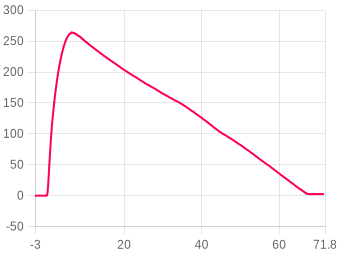
Hybrid mode
i
When enabled, the altimeter records at full speed during ascent then switches to half speed after apogee to extend recording time during descent.
Enabled
Sync sensors
i
The filters on the pressure sensor can cause it to lag very slightly behind the Accelerometer and Gyroscope data. The Sync sensors option detects how far out of sync these sensors are. It then corrects the Acceleration and Gyroscope readings to match the pressure sensor.
ATIVADO (44 samples / 109.42ms)
Orientation
i
This is the orientation you intend to install the Altimeter in your rocket. It's needed to ensure completly accurate angles and orientation charts and reports. Check out the Manual for more information on this.
IMU filter
i
The IMU filter, or fusion filter takes the data from each axis of the Gyroscope and Accelerometer to calculate the Pitch, Roll, Yaw and tilt angle from vertical. These filters can build up some discrepency over time so it's important to calibrate your sensors to minimise this.
Attitude filter 6-Axis
Launch ALP
i
This is prevention against accidental launch detection.

With this disabled the launch is based only on pressure and something that creates a low pressure can trigger the flight by accident. For example pulling your nose cone off can even trigger it.

With this enabled the rocket also needs to have seen 8 samples (0.25 seconds) of acceleration above this setting in the last 3 seconds as well as the pressure drop to trigger. There is a backup trigger of 1.05 seconds of altitude being above the launch detect setting too.

There are very few situations where this option would cause issues, so we suggest leaving it on.
2.0G
Launch lock
i
When enabled, the altimeter locks out recording for a set period after power on to prevent false triggering during setup.
DISABLED
Static temperature
i
A fixed temperature value used for altitude calculation when the external temperature sensor is disabled or not connected.
15 °C
Calibração de sensores
Desvios de calibração utilizados neste voo.
Giroscópio⚠ O giroscópio não foi calibrado
X0.000°
Y0.000°
Z0.000°
Acelerómetro⚠ O acelerómetro não foi calibrado
X0.000 mG
Y0.000 mG
Z0.000 mG

Files

Where the altimeter signs its log, the file carries that signature and a tick beside it. A tick means the data is unchanged since the device wrote it, which is what a record claim needs.
CSV
3165.csv ✓ SIGNED
The log as columns of text. Opens in a spreadsheet, and in every simulator that reads flight data.
848 KB
LOG
3165.aclz ✓ SIGNED
The altimeter's own compressed log, exactly as the device wrote it. This is the file to keep for a record claim.
109 KB
WX
3165_weather.json.gz
The weather for 48 hours either side of the launch, within 15 km of the launch site: NOAA GFS every hour, at the surface and up to about 31 km, and the NOAA GEFS ensemble where this site holds it. JSON, gzip compressed. Weather data by Open-Meteo.com (CC BY 4.0) and NOAA. For 2026-10-25 12:15 local time at 31.9437, -108.5486.
1418 KB
Adjusted CSV2904 recalculated in your browser
The log recomputed for your own sea-level pressure and temperature. Columns: time, altitude as recorded and adjusted, raw altitude as recorded and adjusted, pressure.

This file is built here from the signed log, so it carries no signature of its own. Anyone verifying a claim should be sent to the flight page and build their own from the original.

Custom CSVbuilt in your browser
Pick any of the chart’s data sets, the worked-out ones included, and the part of the flight to cover. Values come in the units the chart is set to.
In the file
Time span

One row for every time any chosen data set has a sample. A data set with no sample at that time is left blank rather than filled in. Built from the chart’s data, so it carries no signature.

Iniciar sessão para comentar.