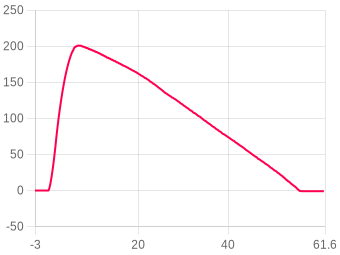
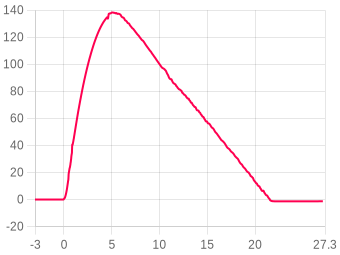
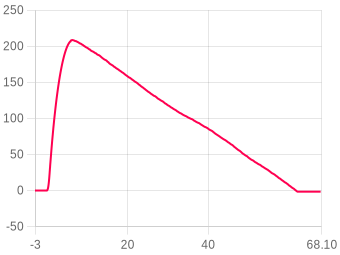
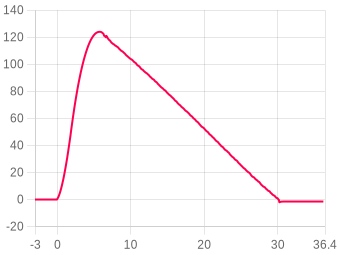
Afstand
Kies de afstandseenheid: Meter(m), Voet(ft), Mijl(mi) of Kilometer(km)
Snelheid
Kies de snelheidseenheid: m/s, ft/s, mph of km/h
Versnelling
Kies de versnellingseenheid: m/s² of G
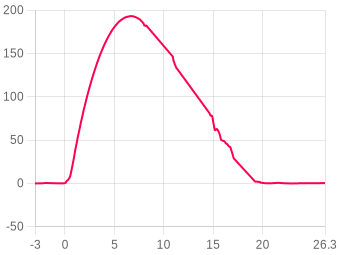
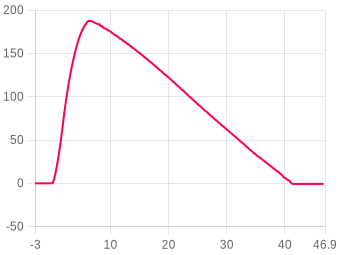
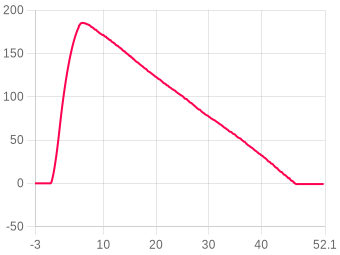
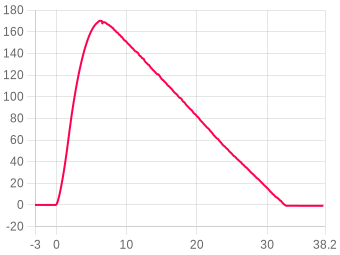
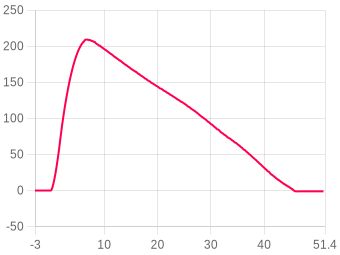
Green Eggs (3) flight 6 (Nano 2)
Toon gebeurtenissen
Apogeum Uitbranding Landing Uitgang/Regels Vergrendelingen Snelheden Uitwerping
Downloaden
Temp. & druk aanpassen ?
Afbeelding
Datasets
Klik op de legenda om datasets te tonen of verbergen
Zoom
Klik en sleep, of knijp op mobiel
Vlucht vergelijken ?
Vluchtsamenvatting
Hoogte
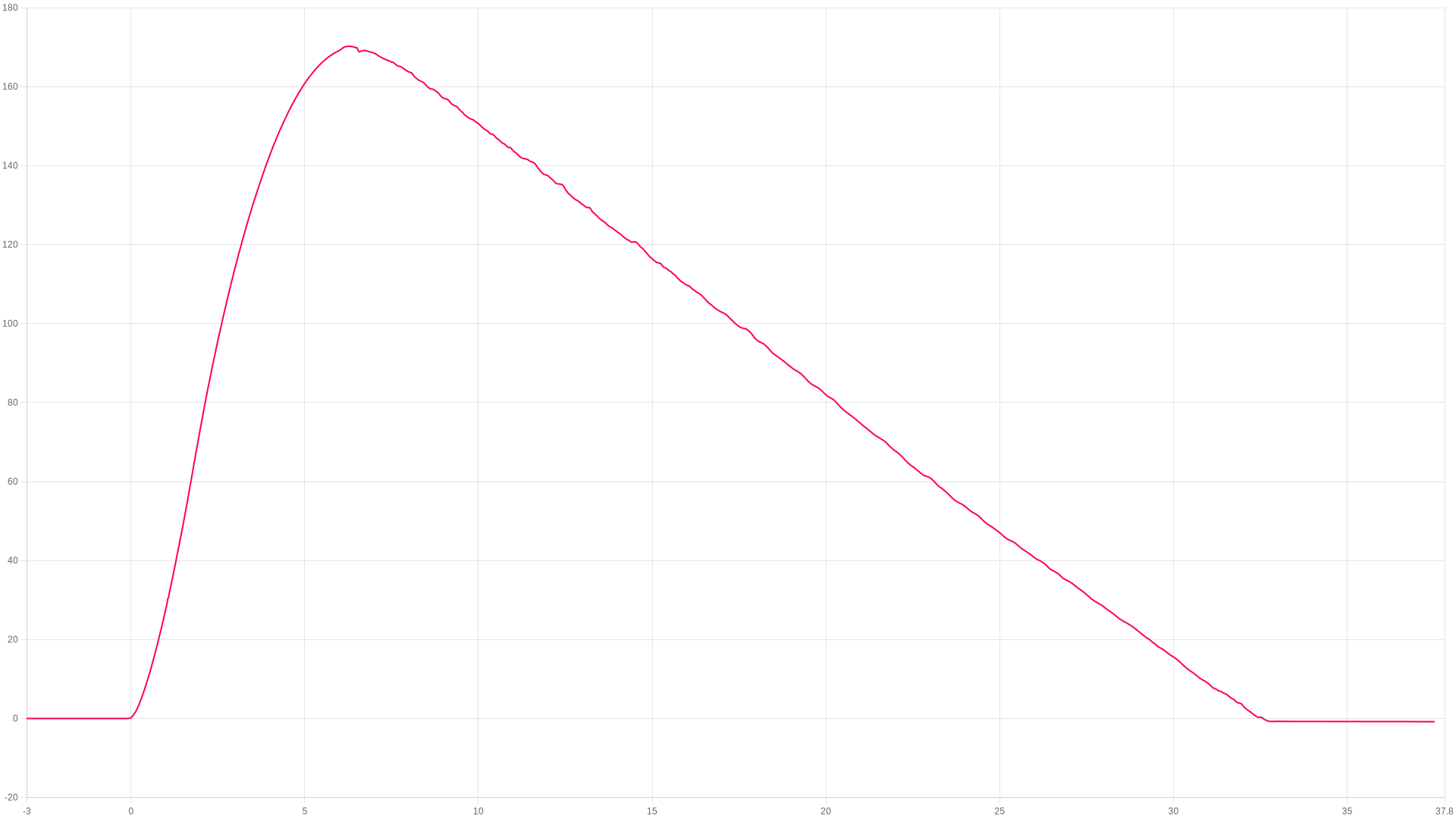
Apogeum
170.23 Meter
Tijd tot apogeum
6.28 seconds
Hoogte uitbranding
69.7 m
Hoogte max. snelheid
63.44 m
Hoogte uitwerping
169.71 m
Hoogte landing
-0.4 m
Stabiliteit
Stabiliteitsscore
93.3 / 100   (Uitstekend)
Helling bij burnout (20%)91.7
Stamp/gier snelheid (30%)97.3
Coning · boost (25%)96.8
Stuwkrachtrechtheid (15%)88
Launch tilt 3.3° · Coning 16.3/18°/s · Spin 187.9°/s · Thrust 97.5%
About this score
Worked out from the flight log between liftoff and 80% of apogee, independent of the angle the altimeter was mounted at in the airframe.
Helling bij burnout (20%) – how close to vertical it left the rod.
Stamp/gier snelheid (30%) and Coning · boost (25%) – how much the nose swung off the rocket's own axis. The main factor.
Stuwkrachtrechtheid (15%) – how cleanly the motor pushed along the body.
Spin about the rocket's own axis is not counted against it — a fast, straight spin is stable. The line under the bars shows the raw measurements.
Snelheid
Max. stijging
52.15 m/s
Max. daling
-14.81 m/s
Bij uitbranding
47.860 m/s
Snelheid landing
-6.276 m/s
Snelheid daling
-6.300 m/s
Snelheid uitwerping
6.25 m/s
Recovery
Single deploy (no dual deploy detected)
Versnelling
Max. stijging
30.64 G
Max. daling
28.99 G
Max. tijdens verbranding
13.02 G
Gem. stijging
0.35 G
Gem. verbranding
2.76 G
Tijden
Uitbranding (eerste)
1.92 seconds
Apogeum
6.28 seconds
Mogelijke uitwerping
6.086 seconds
Landing
32.65 seconds
Hoeken
Helling lanceerplatform
7.22°
Thrust calc pad tilt
3.3°
Max. helling tot uitbranding
10.80°
Rol bij lancering
-1.37°
Stamp bij lancering
-7.08°
Max. rotatie (verbr.)
259.7 dps
Gem. rotatie (verbr.)
186.55 dps
Algemeen
Uploaddatum
18/06/26-03:32:51
Datapunten
5960
Totale opnametijd
48.918 s
Gem. monsters/s
121.8
Aantal vergrendelingen
0
Opnamehoogte
-41.78 m
Lancering na inschakelen
5m 58s
Referentie-as
X
Batterij & temperatuur
Batterij start
63%
Batterij einde
63%
Temperatuur start
41.58°C
Temperatuur einde
42.71°C
Vluchtdata-animatie

FLIGHT 1816

170.23 Meters

ALTITUDE
0.00m
VELOCITY
0.00m/s
ACCEL
0.00G
TILT
0.00°
PITCH
0.00°
ROLL
0.00°
YAW
0.00°
TIME
0.00s
AWAITING LAUNCH
ALT
altimetercloud.com
LAUNCH T+0.00s LANDING

BURNOUT

Motor burn complete

Opmerking: De vluchtanimatie vereist dat uw hoogtemeter in een vaste oriëntatie is gemonteerd. Kalibreer uw sensoren voor de beste resultaten.
Gebruikersnotities
Nano appeared to have run down after flight, but log was recovered after charging for some time. flightinfo.html is blank. Odd that the stats here show charge at 63% post-flight.
Voeg dit apparaat toe aan uw account om te bewerken
Youtube-video
Geen video
Voeg dit apparaat toe aan uw account om te bewerken
Vluchtafbeeldingen (0)
Geen afbeeldingen
Gekoppelde raket
Geen raket gekoppeld aan deze vlucht
Apparaatinformatie
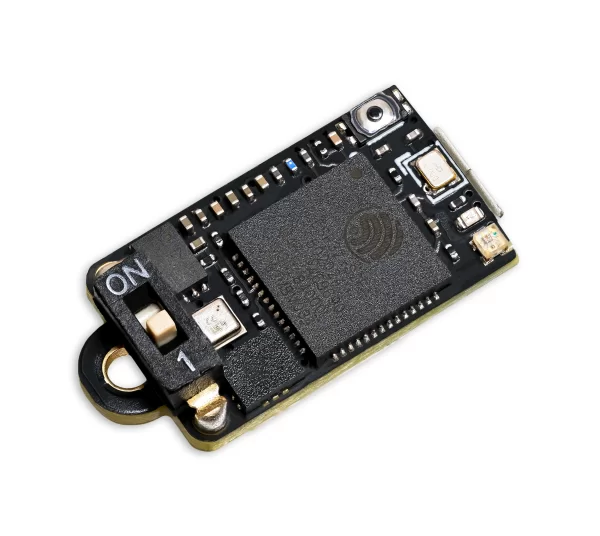
Nano V1
Deze vlucht is gevlogen met een Nano V1.
Hardwareversie
Rev 4
Softwareversie
1.52
Laatst online
18/06/26-03:32:51
Druksensor
Bosch BMP 581
Versnellingsmeter
32G 3-axis
Gyroscoop
2000 dgps 3-axis
Vluchtmotoren
1st Stage
1x
Estes
D12-5
Voeg dit apparaat toe aan uw account om te bewerken
Motorbrandduur
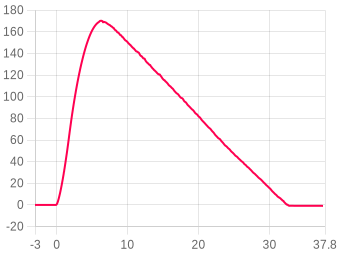
The dashed line is the combined thrust curve for your motors (data from thrustcurve.org), scaled so its peak matches the recorded acceleration maximum — the shape is meaningful, the absolute level is not (your rocket's weight is unknown).
Lanceerplaats, datum & tijd

Klik op de kaart om uw lanceerlocatie te markeren. Schakel tussen kaart- en satellietweergave.

Klik op de kaart · Sleep om aan te passen

Lat Lng
✓ Launch location saved successfully.
✗ Could not save location — please try again.
Vluchtvergelijking
Comparing against 5 other flights with the same motor configuration.
Highest apogee170.23 m 5th of 6
The maximum altitude reached above the launch point.
you
best
Best stability93.3 /100 1st of 6
How straight it flew: launch, coning and thrust straightness combined. 100 is perfect.
you
best
best 93.3 /100 · you
Fastest velocity52.15 m/s 5th of 6
Peak ascent velocity recorded during the flight.
you
best
Best avg burn G1.04 G 5th of 6
Average acceleration during the motor burn, in G.
you
best
Longest flight48.91 s 6th of 6
Total recording time from launch to landing.
you
best
Lowest spin186.55 dps 1st of 6
Average spin rate during the burn.
you
best
best 186.55 dps · you
Coldest flight0.41 C 5th of 6
Board temperature at launch.
you
best
🌲 Is it in a tree?-0.4 m 1st of 6
Just for fun: whichever flight came down closest to 8 m above the launch point (roughly tree height) is the one most likely stuck up a tree.
8 m
you
best
closest to 8 m · you at -0.4 m
Algemene vluchtinstellingen
Dit is een momentopname van de instellingen die voor deze vlucht zijn gebruikt. Ga naar de Ga naar de pagina Mijn apparaten en configureer de instellingen..
Voorspelde druk
i
Set this to your local forecast pressure at sea level. This will offer you slightly improved accuracty for your flight, although it's not 100% essential every little helps!

Xcweather.co.uk is a decent place to grab pressures from for your location and time.
1013.2 mbar
Lanceerdetectie
i
This is the altitude above the launch pad altitude where the altimeter will trigger itself into recording / flight mode.

The altimeter keeps a constant average of the pressure while waiting for launch, it uses a simple algorithm and the pre-flight buffers to do this. The most recent 120 samples (~4 seconds) are ignored so your pre-trigger altitude won't effect the ground baseline.

For almost all uses we suggest keeping this on the 25 Meter (~82 feet) default settings. If you want to test your altimeter by throwing it in the air, or are planning a very low flight you may want to lower the setting.
30 meters
Sample ratio
i
The altimeter runs at 50Hz however you can record every sample or every X samples in order to extend the log time. For example if you set the ratio to 1 it will save 1:1 samples, or if you set it to 3 it will save 1 in 3 samples.
1:1 (50Hz)
Max samples
i
This is the maximum samples the altimeter will log per flight. When it reaches this amount it will stop and save the recording.
0
Recording stop
i
This setting is how the altimeter decides to stop recording. You can choose either 450 (~9s) or 900 (~18s) samples stable or it will record until the max samples limit unless you press the BUTTON in Manual stop mode.

The samples stable method waits for the devices altitude not to change for the set number of samples. This is defined by not changing by more than +/- 1.0 meters for 98% of the samples, it's a reliable method to stop the recording after landing within 8-10 seconds (300 sample) or 16-20 seconds (600 sample).
Auto: 450 samples stable (~9s)
Oversampling
i
Oversampling is a internal setting of the BMP 390 pressure sensor. It is how many samples are taken for each reading. By taking multiple samples for each pressure reading the altimeter reduces noise and increases the resolution of the output.

The sensor can run at 50 samples per second in 4X mode, so we suggest leaving it in this mode as it will offer the highest accuracy.
16x Oversampling
IIR filter
i
The IIR filter is another internal sensor for the BMP390 pressure sensor. It is a Infinite impulse response filter used to enhance pressure measurement accuracy by reducing noise. It's primarily for smoothing out rapid pressure changes.

We suggest not setting this too high as it will cause delay to changes in altitude if set very high.
COEFF 7
Pressure filter
i
This filter is a software Kalman filter that runs on the altimeters processor.

The Kalman filter uses a prediction step based on a system model and then a correction step using new measurements to refine its estimate, it creates accurate most certain results from data with noise in it.
TruePath 1.0
Sample speed
i
The sample rate of the altimeter's sensors. 50Hz takes 50 samples per second, 100Hz takes 100 samples per second for higher resolution data.
200 Hz
Hybrid mode
i
When enabled, the altimeter records at full speed during ascent then switches to half speed after apogee to extend recording time during descent.
Enabled
Sync sensors
i
The filters on the pressure sensor can cause it to lag very slightly behind the Accelerometer and Gyroscope data. The Sync sensors option detects how far out of sync these sensors are. It then corrects the Acceleration and Gyroscope readings to match the pressure sensor.
INGESCHAKELD (35 samples / 200ms)
Orientation
i
This is the orientation you intend to install the Altimeter in your rocket. It's needed to ensure completly accurate angles and orientation charts and reports. Check out the Manual for more information on this.
Down (text up)
IMU filter
i
The IMU filter, or fusion filter takes the data from each axis of the Gyroscope and Accelerometer to calculate the Pitch, Roll, Yaw and tilt angle from vertical. These filters can build up some discrepency over time so it's important to calibrate your sensors to minimise this.
Madgwick 6-Axis
Launch ALP
i
This is prevention against accidental launch detection.

With this disabled the launch is based only on pressure and something that creates a low pressure can trigger the flight by accident. For example pulling your nose cone off can even trigger it.

With this enabled the rocket also needs to have seen 8 samples (0.25 seconds) of acceleration above this setting in the last 3 seconds as well as the pressure drop to trigger. There is a backup trigger of 1.05 seconds of altitude being above the launch detect setting too.

There are very few situations where this option would cause issues, so we suggest leaving it on.
1.5G
Launch lock
i
When enabled, the altimeter locks out recording for a set period after power on to prevent false triggering during setup.
DISABLED
Static temperature
i
A fixed temperature value used for altitude calculation when the external temperature sensor is disabled or not connected.
15 °C
Sensorkalibratie
Kalibratie-offsets gebruikt voor deze vlucht.
Gyroscoop
X
2.000°
Y
0.000°
Z
0.000°
Versnellingsmeter
⚠ Versnellingsmeter is niet gekalibreerd
X
0.000 mG
Y
0.000 mG
Z
0.000 mG
Vlucht
Reacties
1
Reacties1
Neil 18-Jun-2026 om 12:29
Hi, It's interesting about the battery. I'm wondering if the unit had in fact gone in to deep sleep. In this state you would need to turn the power switch off before connecting it to USB or it would remain in deep sleep.

It does this depending on the post flight setting and/or reaching maximum safe LiPo temperature (60C).

Best practice is ensuring power switch is off before connecting USB or turning it back on for another flight to be sure. Do let me know if you see that issue again though please as it's of interest to me.