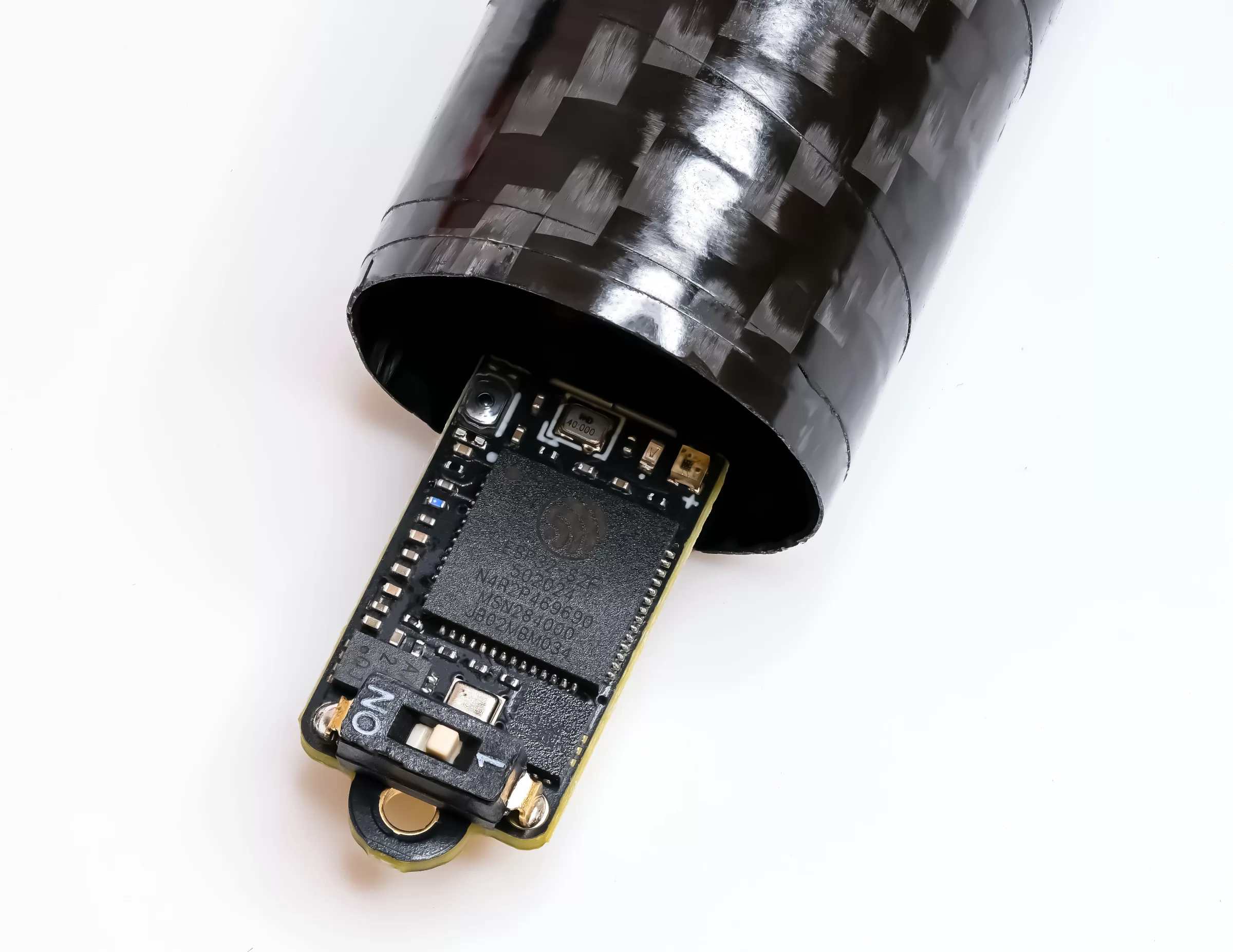
Nano V1 altimeter
The Nano was built for records and competition flying. Those flights need two things, no wasted space or weight and secure provable logs where tampering can be detected.
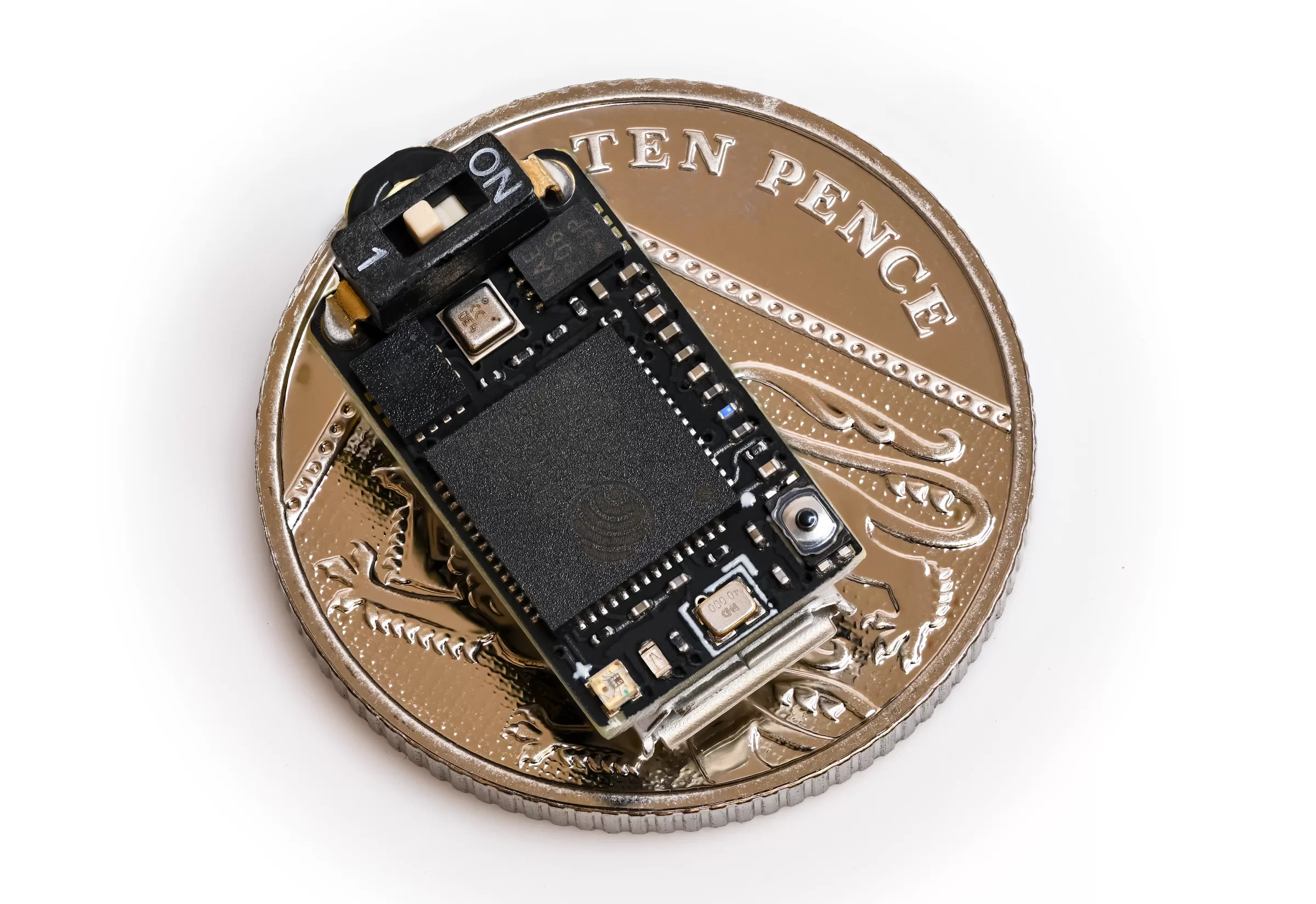
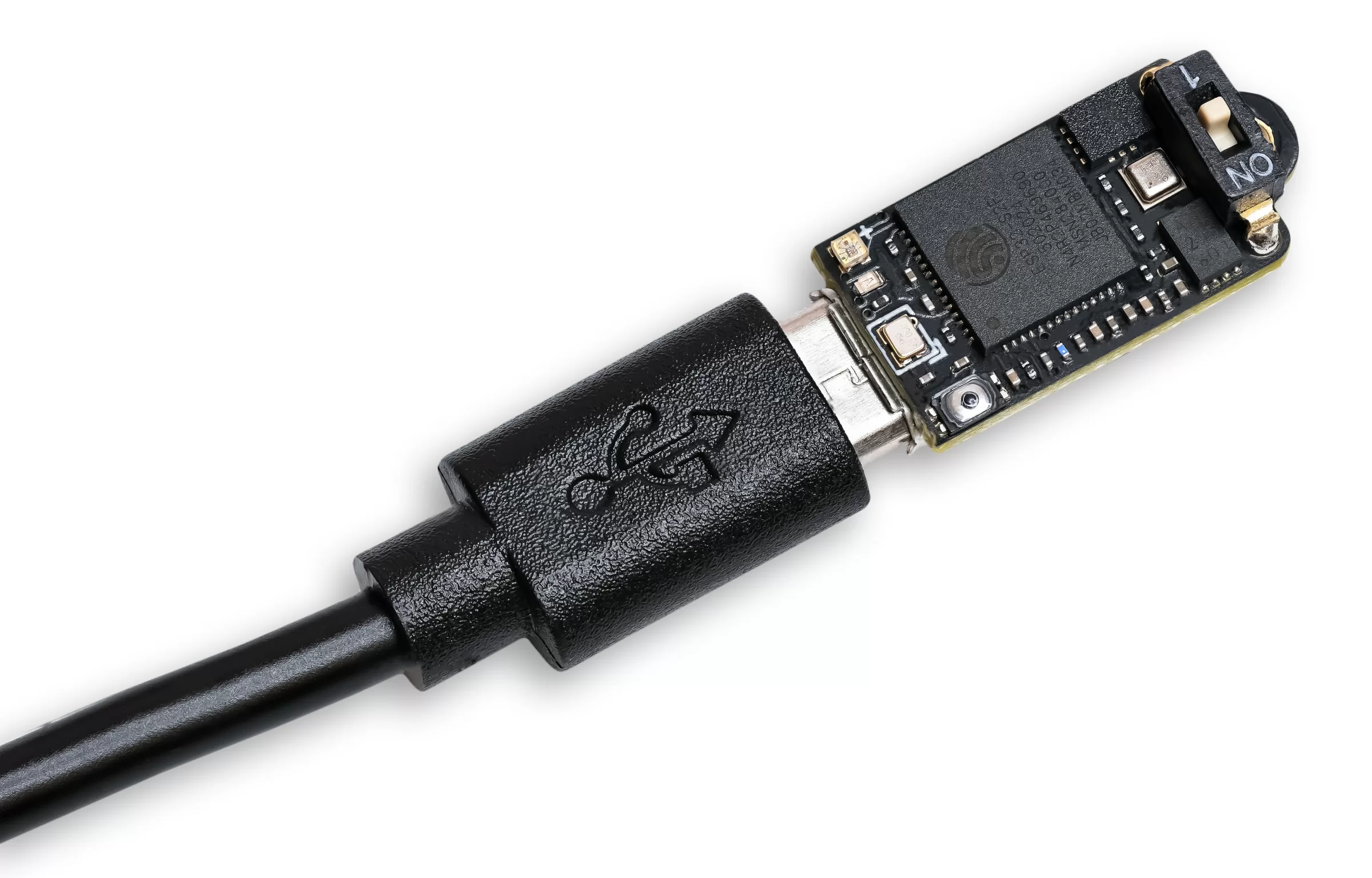
So it weighs 1.65 grams, is 10 mm wide, and every flight it records is cryptographically signed. There is no app to install, nothing to pair and nothing to configure before a launch. Plug it into a USB port when you get back and the flight is there as a USB storage drive ready to upload to the AltimeterCloud or view and share in other software too as you wish.
Small enough to stop planning around
At 1.65 grams the Nano does not change how a model flies unless it's really small.
It does not care how it is mounted, either. The filtering behind the altitude carries the rocket's orientation, so the Nano works at any angle, and it goes on working if it is installed loose and shifts under thrust. Mount it in a fixed orientation and you also get roll, pitch and yaw logged, along with tilt from vertical.
A real flight, at full rate
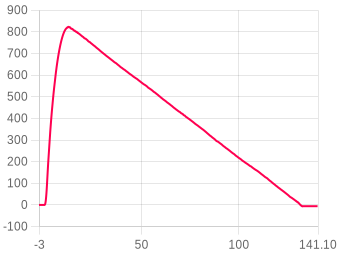
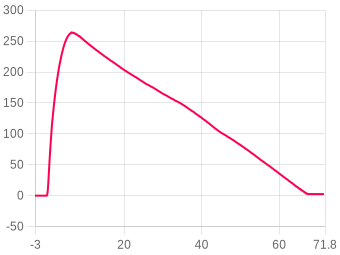
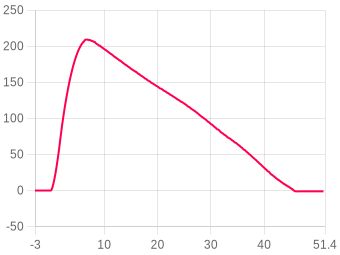
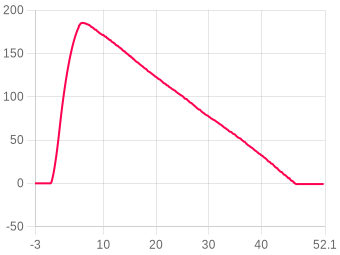
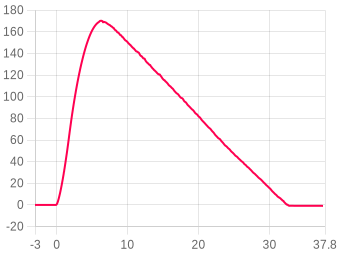
The Nano logs at up to 400 Hz and holds 38,000 samples. That is 95 seconds at the fastest setting, four to six minutes at a typical rate, and about 31 minutes at 20 Hz. For almost every sport flight that means the whole flight at a resolution where the interesting parts are actually visible.

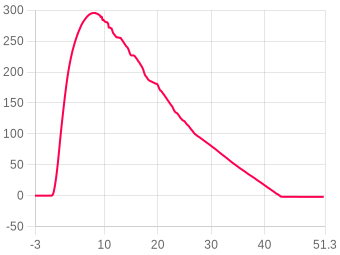
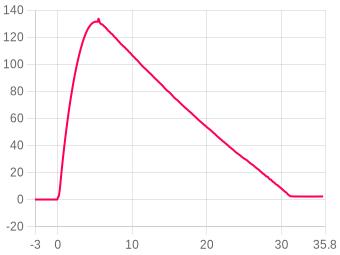
Zoomed into the first few seconds, the same log separates the burn from the coast — which is the point of logging fast. At 10 Hz this is four data points.
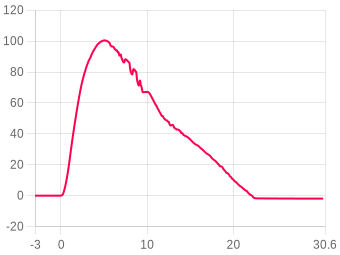
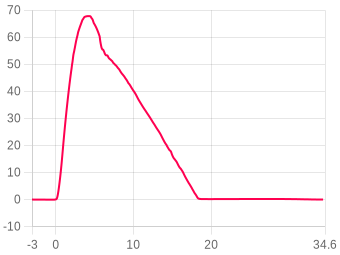
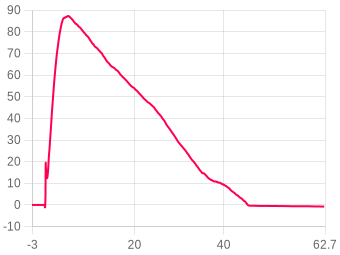
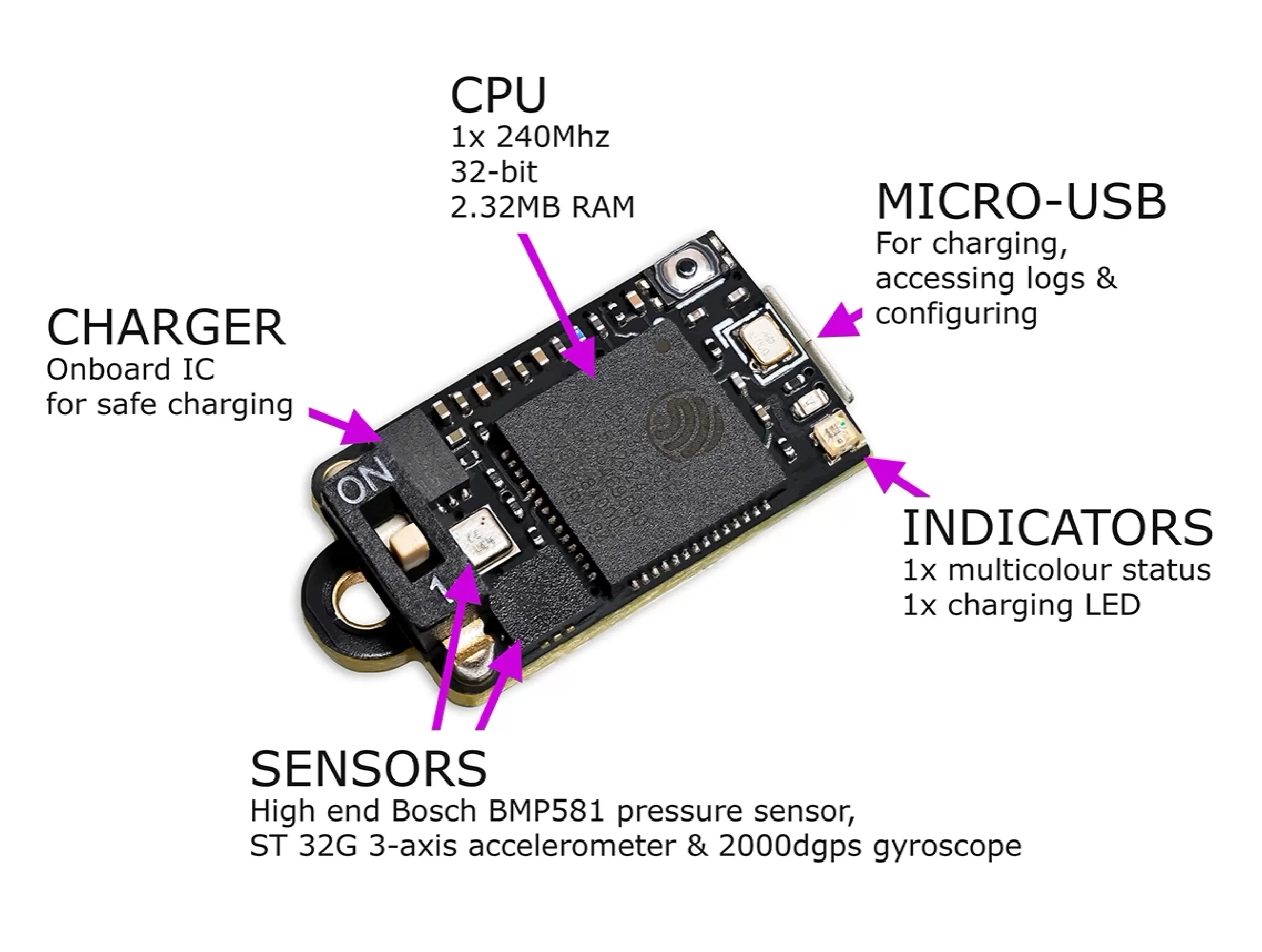
Apogee is where a slow log rate hurts most: the altitude curve flattens, and if you are only sampling a handful of times a second the true peak falls between samples. The Nano reads its Bosch BMP581 1,280 times a second internally and logs up to 400 times a second, so the peak in your chart is the peak the rocket reached, not the nearest sample to it. The sensor's 300–1250 hPa range gives a reliable reading to roughly 9,200 m (30,000 ft).
TrueFuse: knowing when the barometer is lying
A pressure sensor is the best altitude sensor on the board almost all of the time — at rest a modern barometer is accurate to within centimetres. The problem is that a rocket flight corrupts it at exactly the moments you care about, and not with noise. While the rocket is fast, airflow across the static port makes the reading wrong with a size and a sign that persist for the whole burn. When an ejection charge fires inside the airframe the trace can dive hundreds of metres in a fraction of a second and come back.
Averaging does not help. Averaging a consistent lie just gives you a smoother lie.
TrueFuse is not a smoother, it is a referee. The accelerometer knows nothing about air pressure and everything about thrust, so the filter carries the rocket's orientation, projects thrust onto the vertical and integrates it — giving a second witness for precisely the moments the barometer cannot be trusted. It hands the estimate between the two on a schedule set by speed, because the port's error scales with dynamic pressure, and it declines cleanly when the evidence is not good enough.
On the Nano, TrueFuse runs when the flight is saved rather than in flight — the Nano has no decisions to make mid-flight, so it gets the same law with the whole log available. It is the same filter that runs live on the Mercury and the Jupiter, not a reduced version.
TruePath: cleaning the record without moving apogee
TruePath runs afterwards, on the finished recording, where the whole flight is available at once. A live filter cannot know that the sample it just received is the start of a spike rather than the start of a descent, but a filter running at save can look several seconds either side and be certain. It finds excursions — a departure from a baseline and back to the same baseline — and replaces them with the path the vehicle actually took.
That definition does the heavy lifting, because it excludes sustained motion. A motor burn is not an excursion, it is the signal. Neither is a descent under drogue, or a vacuum chamber test that walks the pressure down and holds it. The opening seconds of flight are never modified at all, and a flagged region that runs too long is discarded rather than repaired. Every limit fails toward leaving the data alone.
Apogee gets particular care. A moving average systematically flattens peaks, averaging in the lower samples either side and reporting a maximum lower than the rocket reached — the worst possible place to introduce an error. TruePath uses a peak preserving smoother that fits a local curve instead, so apogee survives to within about a millimetre and its timing exactly.
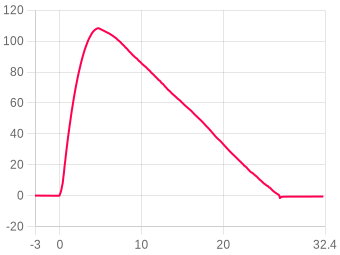
Every log carries the original altitude column alongside the recorded one, so you can chart the flight before and after and see precisely which samples changed and by how much. On a clean flight the difference is a few centimetres of smoothing and nothing else.
Logs you can prove
Every flight the Nano records is sealed with an Ed25519 digital signature as it is written. Change one sample and the log checker catches it and refuses the verified-genuine tick. The log that arrives in your account is provably the log the device wrote, not a file that happens to look plausible.
For a record attempt or a contest flight that is the difference between a number and a claim. It is why the signing is not an option you can switch off, and why the original altitude column travels with the finished one: the whole log is auditable, by you or by anyone checking it.
Flight log recovery means an interrupted upload does not cost you the flight, and the ACLZ log format is supported for anyone who wants to take the data elsewhere.
What is actually on the board
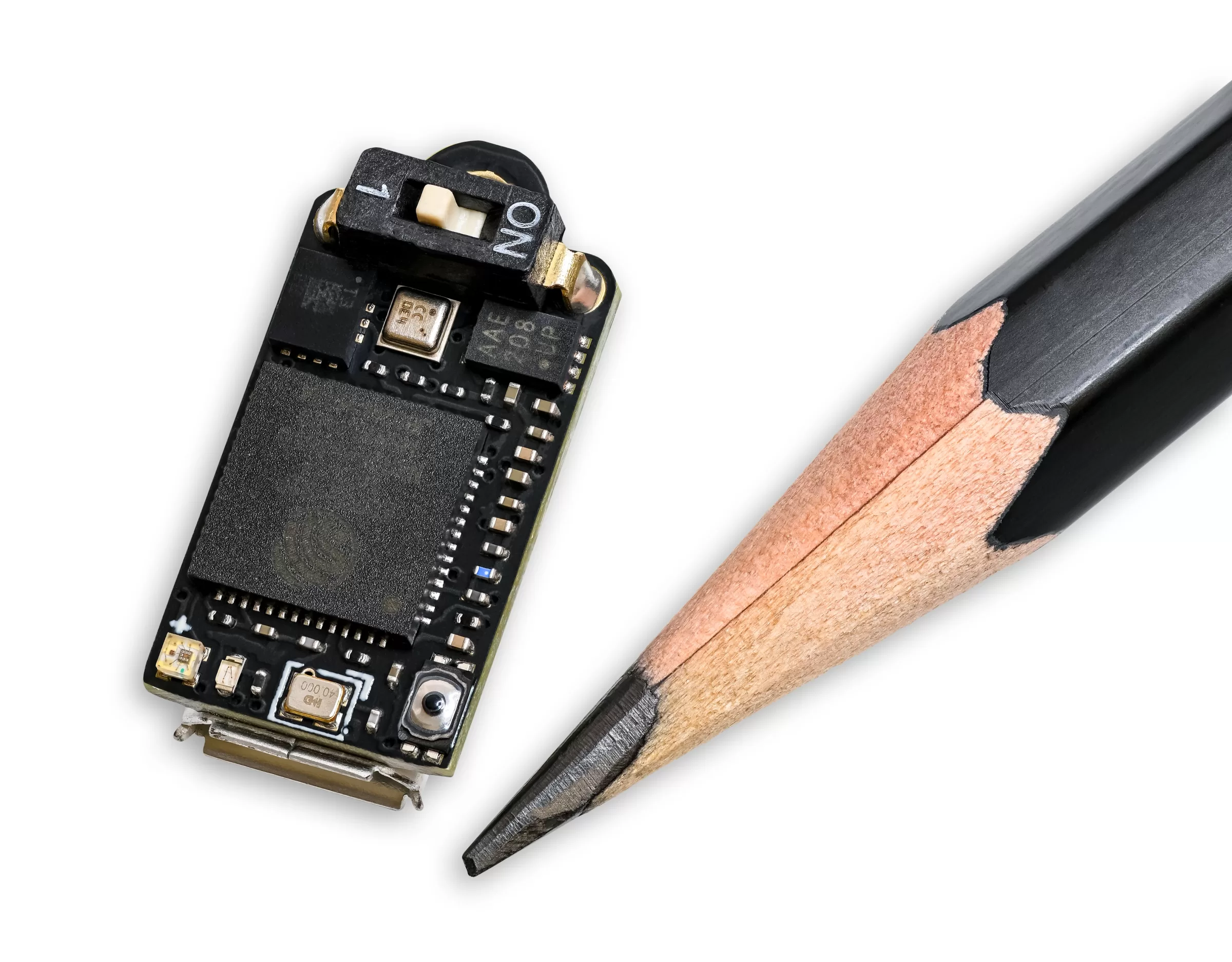
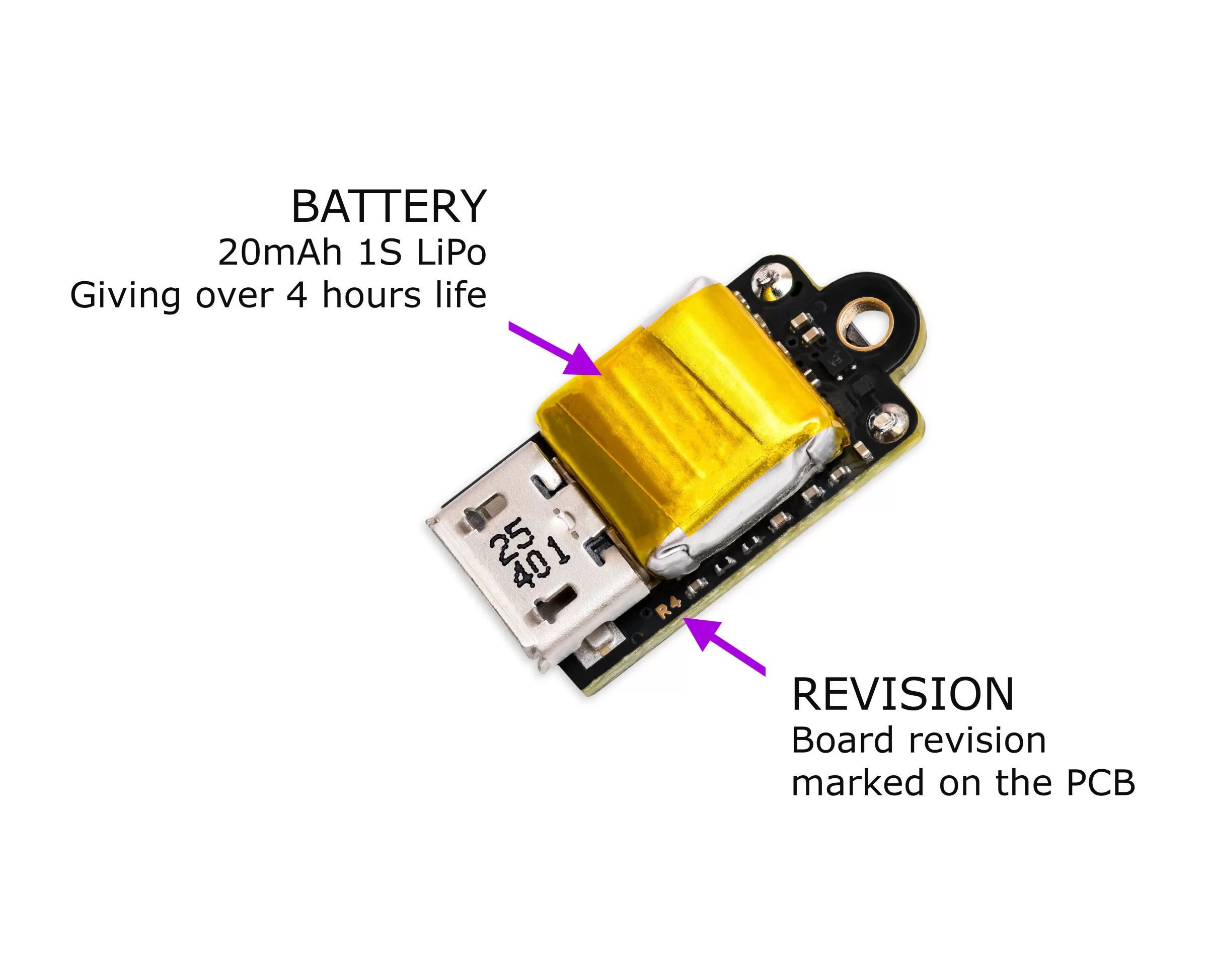
A 240 MHz 32-bit processor, the BMP581 barometer, the accelerometer and gyroscope, 4 MB of flash, a multi-colour status LED, a rechargeable battery with its own charging circuit and a micro-USB port — on a four-layer PCB 20 mm long. Some of the components are no bigger than a grain of sand.
The onboard battery gives about four hours in flight mode, so there is no arming window to worry about on a slow contest day. The flash is split three ways: the application, a recovery buffer and the flight log storage, which is why an interrupted upload does not lose a flight.
The USB port matters more than it sounds. The Nano appears as a mass-storage device, so there is no custom cable, no reader and no driver — a standard USB lead to a PC, a laptop or most phones gets you the logs, the settings file and the summaries.
What it does not do
The Nano is a logger. It has no output channels, so it cannot fire a charge or drive a servo, and it has no wifi, cellular or LoRa — flights come off it over USB. If you need deployment, live tracking or uploads without a cable, the Mercury and the Jupiter are built for that. If you want an honest, fast, featherweight record of the flight, this is the one.
Every line, in full